

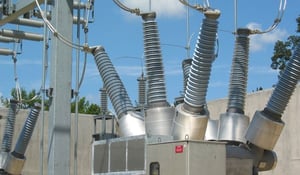
Transformer breathers play a critical role in preserving the health of oil-filled power transformers. They act as the primary defense mechanism against atmospheric moisture, which is one of the leading causes of transformer insulation degradation and catastrophic electrical failures.
Here is a detailed breakdown of how transformer breathers work and how they mitigate moisture-related risks.
1. Why Transformers Need to “Breathe”
Power transformers use insulating oil (mineral or synthetic) to cool the internal windings and provide electrical insulation. As the transformer operates, its temperature fluctuates based on the electrical load and ambient weather:
- When the load increases (or ambient temperature rises): The oil heats up, expands, and pushes air out of the conservator tank (exhalation).
- When the load decreases (or ambient temperature drops): The oil cools down, contracts, and draws external air into the conservator tank (inhalation).
Without a breather, this inhaled air would carry atmospheric moisture directly into the conservator tank, where it would dissolve into the insulating oil.
2. How a Transformer Breather Works
A standard breather is installed on the air vent pipe of the conservator tank. It typically consists of three main parts:
- An Oil Seal (Oil Cup): Located at the very bottom, this cup contains a small amount of transformer oil. It acts as a physical barrier, ensuring that air only enters the breather when there is an active pressure difference (preventing the desiccant from constantly absorbing ambient moisture when the transformer is idle). It also filters out dirt and dust.
- The Desiccant Chamber: This chamber is filled with a moisture-absorbing material, most commonly silica gel. As air is drawn upward through the chamber, the silica gel strips the moisture out of the air, ensuring only completely dry air reaches the oil.
- Color-Indicating Gel: The silica gel is treated with a moisture-sensitive dye (historically cobalt chloride, turning from blue to pink; now more commonly formulation-safe alternatives turning from orange to green/translucent). This color change alerts maintenance crews when the desiccant is saturated and needs replacement or regeneration.
3. How Breathers Reduce Moisture-Related Failure Risks
By keeping the incoming air completely dry, breathers prevent a chain reaction of moisture-driven degradation inside the transformer:
A. Preserving Dielectric Strength (Preventing Flashovers)
Insulating oil has a high dielectric breakdown voltage—meaning it can withstand immense electrical stress without conducting electricity. However, water is highly conductive.
- The Risk: If moisture enters the oil, the oil’s dielectric strength drops drastically. Even a few parts per million (ppm) of water can trigger an internal flashover (a short circuit through the oil), leading to catastrophic explosions or fires.
- The Breather’s Role: By keeping the oil dry, the breather maintains the high dielectric strength required to prevent electrical arcing.
B. Preventing Cellulose (Paper) Insulation Degradation
While the oil is important, the primary insulation on the transformer windings is made of paper (cellulose).
- The Risk: Cellulose is highly hydrophilic (it loves water). If moisture enters the transformer, it will migrate from the oil into the paper insulation. Water, combined with heat, triggers a chemical reaction called hydrolysis, which irreversibly breaks down the molecular chains of the paper. This drastically shortens the physical lifespan of the transformer. Once paper insulation degrades and crumbles, the transformer cannot be repaired and must be replaced.
- The Breather’s Role: Keeping the oil dry prevents moisture from migrating into and destroying the paper insulation, successfully extending the transformer’s life by decades.
C. Preventing Bubble Formation and Partial Discharge
- The Risk: Under heavy loads, the temperature near the transformer windings can spike. If the paper insulation contains high moisture levels, this sudden heat can cause the moisture to boil and turn into water vapor bubbles. These gas bubbles have a much lower dielectric strength than oil. When they pass through high-voltage areas, they cause partial discharges (micro-arcs), which can rapidly lead to total dielectric breakdown.
- The Breather’s Role: Keeping moisture levels in the paper low prevents bubble formation during sudden load peaks.
D. Preventing Acid and Sludge Formation
- The Risk: When moisture, oxygen, and high temperatures combine inside a transformer, the insulating oil begins to oxidize. This chemical process produces acids and solid sludge. Acid corrodes the metal parts of the transformer, while sludge settles on the windings and cooling radiators, choking off heat dissipation and causing the transformer to run dangerously hot.
- The Breather’s Role: Eliminating moisture slows down the oxidation process of the oil, keeping it clean and preventing sludge buildup.
Modern Advancement: Smart (Self-Regenerating) Breathers
Traditional silica gel breathers require regular visual inspections and manual replacement of the saturated gel. If maintenance is delayed, the saturated breather will pass wet air directly into the transformer.
To solve this, modern power grids utilize Smart or Self-Regenerating Breathers. These devices feature:
- Moisture Sensors: They monitor the relative humidity of the incoming air.
- Internal Heaters: When the sensor detects that the silica gel is saturated, a heating element is activated during the exhalation cycle (when the transformer is blowing air out).
- Automatic Regeneration: The heater bakes the moisture out of the silica gel, venting the wet steam out into the atmosphere. This system ensures the desiccant is always dry without requiring manual maintenance, virtually eliminating the human-error risk of saturated breathers.
%20(4).gif?width=346&height=346&name=Images%20(600%20x%20600%20px)%20(4).gif)
Protect Your Transformers from Moisture Damage
Moisture is one of the leading causes of insulation degradation and reduced transformer life, making effective moisture control an essential part of any asset management strategy. Insulect supplies maintenance-free dehydrating transformer breathers from trusted brands including Qualitrol and COMEM, helping keep transformer insulation dry and protected while reducing maintenance requirements. Whether you are specifying equipment for a new project or upgrading an existing fleet, our team can help you select the right breather solution for reliable, long-term transformer performance. Contact us today!