

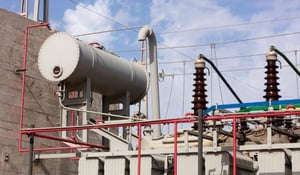
Transformer breathers play a silent yet critical role in determining the long-term insulation ageing and overall lifespan of oil-filled power transformers in substations. Because a transformer’s internal insulation system (comprising cellulose paper, pressboard, and liquid insulating oil) is exceptionally vulnerable to moisture, the performance of the breather directly influences how fast or slow this insulation degrades.
The mechanisms by which transformer breathers influence long-term insulation ageing include the following:
1. Controlling the Thermal “Breathing” Cycle
As power transformers load up and cool down, the internal transformer oil expands and contracts. This causes the transformer to “breathe,” drawing ambient air into the conservator tank or expelling it. Without a functional dehydrating breather, every intake cycle would suck raw, humid atmospheric air straight into the oil preservation system. Over years of operation, unmitigated humidity ingress would rapidly saturate the internal environment.
2. Mitigating Accelerated Cellulose Hydrolysis
The technical service life of a transformer is fundamentally tied to the mechanical and electrical longevity of its solid cellulose (paper) insulation. Cellulose ageing is driven primarily by temperature and hydrolysis (chemical breakdown caused by the interaction of water and cellulose):
- The Moisture-Ageing Link: Water is hygroscopic and naturally migrates into paper insulation. If a breather fails or becomes fully saturated, moisture enters the oil and is quickly absorbed by the paper.
- Exponential Degradation: Research shows that doubling the water content in paper insulation roughly cuts its remaining mechanical life in half. For instance, a transformer operating with well-controlled moisture ages at a standard rate, whereas elevated moisture levels drastically shorten its operational viability and accelerate loss-of-life factors.
3. Preserving Dielectric Strength and Preventing Partial Discharge
Moisture does not just degrade solid paper; it compromises the liquid insulating oil as well.
- High water content heavily degrades the dielectric strength (breakdown voltage) of the oil.
- It also lowers the bubble inception temperature. Under heavy substation loading or sudden overloads, localized hot spots can cause dissolved moisture to flash into gas bubbles, drastically increasing the risk of partial discharge, arcing, and catastrophic dielectric failure.
- Effective breathers keep incoming air dry, protecting the oil’s breakdown voltage and maintaining safe dielectric margins.
4. Traditional vs. “Smart” Breathers and Long-Term Reliability Risk
The type of breather utilized in a substation heavily dictates long-term asset health due to human factor risks and maintenance reliability:
- Traditional Silica Gel Breathers: These rely on chemical desiccant beads that change color (typically from pink/orange to clear/blue) as they absorb moisture. They require rigorous, manual substation inspections. If maintenance staff miss the window when a breather becomes fully saturated, the breather ceases to absorb water, allowing unrestricted moisture to enter the transformer undetected for months. This “blind spot” is a leading cause of premature, unexpected insulation ageing in aging substation fleets.
- Smart / Self-Regenerating Breathers: Modern substations increasingly use automated electronic breathers equipped with humidity sensors, internal heating elements, and programmable logic controllers (PLCs). These units actively monitor atmospheric humidity and automatically heat/regenerate their own desiccant. By providing continuous, uninterrupted moisture control without relying on manual replacement cycles, smart breathers eliminate human maintenance error and dramatically stabilize the internal dry state of the transformer over decades.
Summary
In short, a transformer breather acts as the first line of defense for a substation asset. By stopping atmospheric moisture from entering during thermal cycles, it restrains hydrolytic degradation of the paper insulation, preserves oil dielectric strength, prevents bubble formation, and directly prevents the accelerated loss-of-life that leads to premature transformer replacements.
Looking to protect transformer insulation from moisture?
The right transformer breather can play an important role in reducing moisture ingress and supporting longer insulation life. At Insulect, we offer dehydrating breathers from reputable brands like Qualitrol and COMEM, providing a universal, maintenance-free solution designed to keep transformers dry, protected, and operating reliably. Talk to our team to find the right breather solution for your transformer and substation application.