

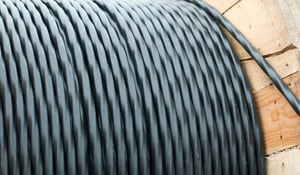
High-voltage underground cables can develop dangerous sheath voltage rises primarily due to electromagnetic induction from the alternating current (AC) flowing through their main conductors. This phenomenon is a critical concern for both operational safety and the longevity of the cable system.
Here’s a breakdown of how these dangerous voltage rises occur:
-
Electromagnetic Induction
The core principle is electromagnetic induction. When AC flows through the cable’s central conductor, it generates a time-varying magnetic field around it. This fluctuating magnetic field, in turn, induces an electromotive force (EMF) or voltage in any adjacent metallic components, such as the cable’s sheath or armor, according to Faraday’s Law.
-
Inductive Coupling: This is the primary mechanism. The magnitude of the induced voltage is directly proportional to the conductor’s current, the operating frequency, the mutual inductance between the conductor and the sheath, and the physical arrangement and spacing of the cables. Higher current, higher frequency, and closer proximity between the conductor and sheath lead to higher induced voltages.
-
Capacitive Coupling: High-voltage conductors also create electric fields that induce displacement currents in the metallic sheaths, contributing to the overall induced voltage.
-
-
Sheath Bonding Methods and their Impact
The method used to bond (ground) the cable sheath significantly influences how these induced voltages manifest:
-
Solid Bonding (Both Ends Grounded): In this method, the metallic sheath is grounded at both ends. While simple to install, the induced voltage creates a continuous closed-loop path, leading to significant circulating currents in the sheath. These circulating currents cause:
-
Power Losses and Heating: Ohmic losses (I²R losses) occur, generating heat. This heating can elevate the cable’s temperature, potentially damaging its insulation and reducing its current-carrying capacity (derating).
-
Increased Fault Currents: During fault conditions, these circulating currents can escalate into dangerous fault currents, further exacerbating heating and potential damage.
-
-
Single-Point Bonding (One End Grounded, Other Insulated): To eliminate circulating currents, the sheath is grounded at only one end, with the other end left open and insulated. While this effectively prevents circulating currents under normal operation, it introduces another problem:
-
Progressive Voltage Rise: A voltage is induced along the sheath that progressively increases with the distance from the grounded point, reaching its maximum at the insulated end.
-
Dangerous Potential Differences: This induced voltage can become dangerously high, especially in longer cables or during fault conditions. This poses a significant safety hazard for personnel (touch voltage) and can lead to insulation breakdown if the voltage exceeds the sheath’s dielectric strength. Sheath Voltage Limiters (SVLs) are often installed at the insulated end to protect against excessive transient voltages during fault conditions.
-
-
Cross-Bonding: For longer high-voltage cables, cross-bonding is commonly employed to mitigate both circulating currents and high induced sheath voltages. The cable sheaths are divided into sections and then cross-connected in such a way that the induced voltages in successive sections effectively cancel each other out. This significantly reduces circulating currents to near zero and limits sheath-to-earth voltages, though it is a more complex and costly installation.
-
-
Factors Exacerbating Sheath Voltage Rise
Several factors can worsen sheath voltage rises:
-
Cable Length: Longer cables generally experience higher induced voltages, particularly in single-point bonded systems, as the EMF accumulates over a greater distance.
-
High Conductor Current: Higher load currents in the main conductor lead to stronger magnetic fields and, consequently, higher induced voltages.
-
Fault Conditions: During system faults, especially single-phase ground faults, the current magnitude can increase dramatically, leading to a substantial rise in sheath voltages.
-
Cable Configuration: The physical arrangement (e.g., flat formation) and spacing of individual cables within a trench can affect mutual inductance and lead to unequal induced voltages across phases.
-
How Insulect Sheath Voltage Limiters Help Protect Cable Systems
As high-voltage underground cable networks continue to expand, effective management of sheath voltage rise is essential for maintaining system reliability, personnel safety, and asset longevity. Without adequate protection, induced voltages, switching surges, and lightning events can expose cable sheaths and accessories to damaging overvoltages.
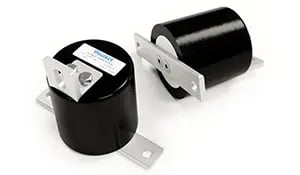
Insulect manufactures high-quality Sheath Voltage Limiters (SVLs) in Australia, specifically designed to protect cable sheath insulation from excessive voltage stress. SVLs operate by limiting transient overvoltages to safe levels and providing a controlled path for surge currents to earth, helping prevent insulation breakdown and extending the service life of cable systems.
Suitable for single-point bonded, cross-bonded, and special bonding arrangements, Insulect SVLs help utilities, contractors, and industrial operators improve the reliability and safety of their underground cable installations while complying with industry standards and network requirements.
Contact Insulect
Whether you're designing a new cable installation, upgrading an existing network, or investigating sheath voltage issues, the Insulect team can help you select the right SVL solution for your application.
Contact Insulect today to discuss your project requirements and learn how Australian-made Sheath Voltage Limiters can help protect your underground cable assets.