

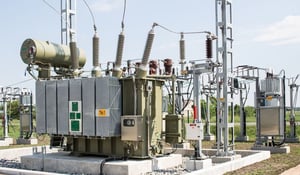
Dissolved Gas Analysis (DGA) is one of the most widely used diagnostic tools for assessing the condition of mineral oil-immersed transformers. By measuring gases dissolved in transformer oil, DGA can help identify abnormal gas generation, monitor developing conditions and support transformer maintenance decisions.
However, the quality of a DGA diagnosis depends on the quality of the sample being analysed.
According to IEEE Std C57.104-2019, samples can be incorrectly collected, identified or processed. Poor sampling technique, air exposure, contamination and incorrect sample identification can all introduce data quality problems that may lead to misleading DGA results.
This means that an unusual DGA result does not always indicate a developing transformer fault. Before taking action, it is important to establish whether the sample and the resulting data are reliable.
Why DGA Sample Quality Matters
DGA interpretation relies on detecting changes in the concentration and pattern of dissolved gases over time.
The IEEE guide points out that gas concentrations can naturally vary due to operating and environmental conditions, while measurement uncertainty and poor sampling can add further variation. These factors can make a subtle or intermittent fault difficult to distinguish from normal background conditions.
A poorly collected sample can therefore create two problems:
- False positives: the results may suggest a problem that does not actually exist.
- False negatives: a real abnormality may be missed or its significance underestimated.
For this reason, IEEE recommends that DGA results undergo a data quality review before interpretation. When unexpected or alarming results are obtained, collecting and processing another sample to confirm the result is highly advisable.
Common Causes of DGA Sample Mishandling
IEEE Std C57.104-2019 identifies several opportunities for data corruption during the sampling process.
1. Sampling from the wrong point
A sample needs to represent the part of the transformer being investigated.
IEEE notes that a sampler may accidentally collect a sample from the wrong sampling point. This is particularly important because DGA can be applied to different components, including the main tank, bushings, cables and load tap changers, and these applications can require different interpretation approaches.
Before sampling, the equipment and sampling location should therefore be clearly identified.
2. Incorrect or incomplete sample identification
A DGA sample is only useful if the laboratory knows exactly where it came from.
IEEE highlights errors such as incorrect transcription of nameplate information, differences between the information on the sample container and the accompanying field form, and waiting until all samples have been collected before labelling them.
Relevant information should include details such as:
- Transformer identification or serial number
- Sampling compartment and location
- Sampling date
- Reason for sampling
- Transformer kV and MVA ratings
- Preservation system
- Type of insulating liquid
IEEE specifically emphasises the importance of providing accurate transformer information to support DGA database management and interpretation.
3. Air contamination
Air contamination is one of the key sampling issues identified by IEEE.
DGA measures gases dissolved in transformer oil. Introducing air into the sample can change the measured gas concentrations and potentially distort the interpretation.
IEEE recommends using an appropriate sampling procedure, such as ASTM D923, and identifies a gas-tight glass syringe as the preferred sampling vessel because it helps minimise gas loss and air contamination.
The sampling procedure should also prevent air from entering the transformer itself.
4. Failing to purge the sampling valve
A representative sample cannot be obtained if the sampling system contains trapped air or stagnant insulating liquid.
According to IEEE Std C57.104-2019, the sampling valve should be purged each time. The sampling system should initially be opened to atmosphere so that trapped air can escape, and the sample should only be taken once the valve has been purged of trapped air and stagnant insulating liquid.
This simple step is important because the first liquid leaving the sampling point may not accurately represent the oil within the transformer.
5. Contaminated tubing or fittings
Sampling equipment itself can introduce problems.
IEEE identifies contaminated tubing and fittings as potential sources of data corruption during sampling.
Sampling equipment therefore needs to be appropriately maintained and prepared before collecting the sample.
6. Using an unsuitable sample container
The sample container plays an important role in preserving the dissolved gases until analysis.
IEEE recommends a gas-tight glass syringe as the preferred container for DGA samples because it helps minimise gas loss and air contamination.
Using inappropriate equipment or allowing the sample to become exposed to air can affect the integrity of the result.
Sampling Safety Is Also Critical
DGA sampling is not simply a laboratory-quality issue. It is also a transformer safety issue.
IEEE states that sampling procedures should be carried out safely, without compromising the transformer insulating liquid level, contaminating the sample with air or allowing air to enter the transformer.
Importantly, IEEE provides a specific caution regarding negative pressure. Sampling from a transformer tank when negative pressure is known or suspected should never be performed, because this can result in air ingress and potentially catastrophic consequences.
This is why DGA sampling should be performed by suitably trained personnel following appropriate procedures.
What Happens When Sample Quality Is Poor?
Poor sampling can produce DGA results that look unusual when compared with historical data.
For example, IEEE notes that consistently large fluctuations between consecutive DGA results can indicate sampling or analytical errors. Where the reason for the fluctuation has not been established, the results should not be relied upon for fault identification or severity assessment, and resampling is recommended.
Air exposure can also produce clues in the DGA data. IEEE notes that an isolated increase in the oxygen-to-nitrogen ratio, particularly when associated with a decrease in hydrogen, may indicate an air exposure problem.
This demonstrates why looking at the latest DGA result in isolation can be misleading.
Don't Diagnose a Transformer From One Questionable Sample
One of the most important messages from IEEE Std C57.104-2019 is that an unusual DGA result should not automatically trigger major corrective action.
The guide states that costly or drastic measures should not be based on DGA alone, particularly on an individual isolated sample, without confirmation through additional DGA results and/or other tests and expert consultation.
When a result appears unexpected or alarming, a sensible process is to:
1. Check the sample data
Confirm the transformer identification, sampling point, sample date and other relevant information.
2. Review the sampling process
Check whether the correct sampling point and equipment were used and whether the sample could have been exposed to air or contamination.
3. Compare with historical DGA results
Look for consistent trends rather than relying on a single result.
4. Collect a confirmation sample
If the result remains questionable or alarming, IEEE recommends obtaining and processing another sample.
5. Consider other evidence
Transformer operating conditions, maintenance records, load history and other diagnostic tests can help put the DGA result into context.
Good DGA Starts With Good Sampling
DGA can provide valuable insight into transformer condition, but the analysis is only as reliable as the data behind it.
IEEE Std C57.104-2019 emphasises the importance of proper sampling procedures, trained personnel, accurate sample identification and data quality review. The guide also recommends following recognised sampling practices such as ASTM D923 and using a gas-tight glass syringe to minimise gas loss and air contamination.
For transformer owners and maintenance teams, the key takeaway is simple:
Before interpreting an unexpected DGA result, make sure the sample itself can be trusted.
A careful sampling process can help reduce misleading results, improve the reliability of DGA trending and provide a stronger foundation for transformer condition assessment.
A note on the standard
This article is based on IEEE Std C57.104-2019, IEEE Guide for the Interpretation of Gases Generated in Mineral Oil-Immersed Transformers. The guide applies to mineral oil-immersed transformers and covers DGA interpretation, operating procedures and diagnostic techniques.
IEEE Std C57.104-2019 also references ASTM D923 for sampling electrical insulating liquids and ASTM D3612 for analysis of gases dissolved in electrical insulating oil.
Note: IEEE Std C57.104-2019 is a guide for mineral oil-immersed transformers. Other insulating liquids, such as ester-based or silicone liquids, are addressed by other IEEE guides identified in C57.104-2019.
Improve the Reliability of Your DGA Data
Reliable DGA starts with reliable monitoring. Insulect provides DGA monitoring solutions to help transformer owners continuously monitor dissolved gases, identify developing abnormalities and make more informed asset management decisions. Contact us today and explore our DGA monitoring solutions to support more reliable transformer condition assessment.