

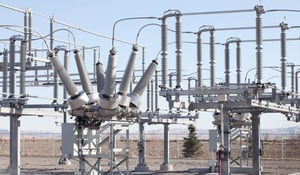
Load break switches (LBS) play a significant role in distribution networks, primarily for safely making and breaking normal and limited overload currents. However, their operation inherently involves switching actions that can generate transient overvoltages, which can pose risks to network equipment. The impact on overvoltage risk varies depending on the type of LBS and the characteristics of the electrical system.
Mechanisms of Overvoltage Generation by Switching Operations: Switching transients, or sudden voltage spikes, occur in power systems during abrupt circuit changes, such as the opening or closing of switches. These transients are short-lived and oscillatory, imposing significant stress on electrical equipment. Key causes related to switching include:
- Current Chopping: When an LBS rapidly interrupts an inductive current before it naturally reaches zero, the magnetic energy stored in the inductive load is converted into electrical field energy, leading to a “cut-off over-voltage”. This phenomenon is particularly associated with vacuum-type switching devices due to their strong arc-extinguishing capabilities.
- Multiple Re-ignitions: In some cases, particularly with vacuum switches, the arc may re-ignite multiple times during the interruption process, leading to high-frequency overvoltages that can be harmful to insulation, especially in transformers.
- Load Switching: Disconnecting heavy inductive loads like motors can lead to voltage spikes (inductive kickback) that are 2-3 times the nominal system voltage. Similarly, switching capacitor banks can trigger oscillatory transients.
Impact of Different LBS Types on Overvoltage Risk: Load break switches employ various arc-extinguishing methods, which influence their overvoltage characteristics:
- Vacuum LBS: These switches utilize a vacuum to extinguish arcs. While offering advantages like compact size and low maintenance, vacuum LBS are noted for potentially generating higher switching transient overvoltages, especially current chopping overvoltages and multiple re-ignition overvoltages, which can lead to transformer failures and insulation degradation. The severity of these overvoltages is influenced by factors like the contact material and the length of connecting cables.
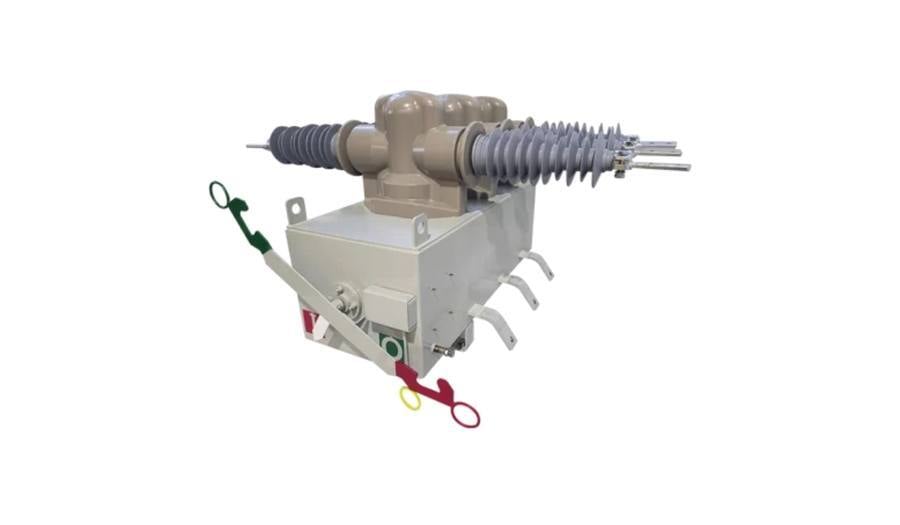
- SF6 LBS: These switches use sulfur hexafluoride (SF6) gas for arc quenching and insulation. SF6 gas has excellent arc-quenching properties, absorbing free electrons from the arc and cooling it efficiently. While SF6 circuit breakers and LBS can still contribute to switching transients, the behavior regarding overvoltage generation may differ from vacuum types. SF6 LBS are generally suitable for higher voltage networks and harsh environments.
- Other Types (e.g., Puffer, Solid Gas-Generating): These types also utilize different mechanisms to cool and extinguish the arc. Their specific impact on overvoltage generation would depend on the effectiveness and speed of their arc suppression.
LBS Role in Distribution Networks and Overvoltage Mitigation: Load break switches are crucial for controlling and protecting power systems by isolating sections of a network for maintenance or during overloads, thereby reducing downtime. They are designed to operate safely under normal and specified overload conditions, but unlike circuit breakers, they are not intended to interrupt short-circuit fault currents. For comprehensive protection against fault currents, LBS are often used in conjunction with high-voltage fuses.
While LBS operations can generate overvoltages, the overall impact on risk is also tied to mitigation strategies. Measures like controlled switching of circuit breakers, surge arresters, surge capacitors, and snubbers are used to minimize the effects of switching transients and protect equipment from damaging voltage surges. The choice of LBS type and proper system design, including the coordination with protective devices, are essential to manage overvoltage risks effectively in distribution networks.