

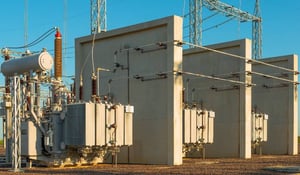
Condition-based maintenance (CBM) improves transformer reliability by using equipment condition data, monitoring and diagnostic testing to identify developing problems before they lead to equipment failure. Rather than relying solely on fixed maintenance schedules, CBM allows asset owners to make maintenance decisions based on the actual condition and operating performance of each transformer.
For utilities, industrial operators and other organisations relying on critical electrical infrastructure, this approach can help identify potential faults earlier, reduce unnecessary maintenance, minimise unplanned outages and make better use of maintenance resources.
As transformers operate under changing load conditions and increasing network demands, understanding their actual condition is becoming an increasingly important part of effective asset management.
Why Is Traditional Time-Based Transformer Maintenance Not Always Enough?
Traditional preventive maintenance typically involves inspecting and servicing transformers at predetermined intervals, regardless of their actual condition.
While scheduled maintenance remains important, it has some limitations.
A transformer may develop an internal fault shortly after a scheduled inspection, meaning the issue could remain undetected until the next maintenance cycle. Conversely, a transformer in good condition may receive maintenance that is not yet necessary.
These limitations can create challenges for asset owners:
- Unnecessary maintenance: Equipment may be inspected or serviced more frequently than its condition requires.
- Undetected developing faults: Problems can develop between scheduled inspections.
- Unexpected outages: Faults that remain unidentified may lead to unplanned equipment outages.
- Maintenance costs: Fixed maintenance schedules may not make the best use of available resources.
- Limited asset visibility: Periodic inspections provide snapshots rather than continuous information about equipment condition.
Condition-based maintenance addresses these challenges by using diagnostic information to determine when maintenance or further investigation is needed.
How Does Condition-Based Maintenance Work for Transformers?
Condition-based maintenance involves collecting, analysing and interpreting information about transformer condition and operating performance.
The process generally involves four stages.
1. Monitor Transformer Condition
The first step is collecting relevant information through routine inspections, oil sampling, diagnostic testing and online monitoring equipment.
Depending on transformer type, age, criticality and operating environment, monitored parameters may include:
- Dissolved gases in transformer insulating oil
- Oil temperature and winding temperature
- Moisture content in insulating oil
- Partial discharge activity
- Bushing condition
- Insulating oil quality
- Load and operating conditions
The monitoring strategy should reflect the equipment's design, failure risks and operational importance.
2. Analyse and Interpret the Data
Collecting data alone does not improve transformer reliability. The information needs to be interpreted to identify abnormal conditions, developing faults and changes in equipment performance.
For example, an increase in certain dissolved gases may indicate overheating, electrical discharge or other developing faults.
Similarly, changes in moisture levels, temperature or partial discharge activity may provide additional information about insulation condition.
Comparing results over time is particularly important. A single measurement may not provide enough information to establish whether a fault is developing, whereas changes and trends can help identify deterioration.
3. Assess Risk and Determine Maintenance Priorities
Once abnormal conditions are identified, asset managers and engineers can assess their significance.
Not every abnormal reading requires immediate intervention. Decisions should consider:
- The severity and rate of change of the condition
- The type of potential fault
- Transformer age and historical performance
- Equipment criticality and network impact
- Operating conditions and loading
- Consequences of equipment failure
This allows maintenance resources to be prioritised according to asset condition and operational risk.
4. Take Action and Review Performance
Depending on the findings, maintenance actions may include:
- Increasing monitoring frequency
- Conducting additional diagnostic tests
- Inspecting specific transformer components
- Treating or replacing insulating oil where appropriate
- Repairing or replacing deteriorated components
- Planning an outage for further investigation or maintenance
Following intervention, additional testing and monitoring can help determine whether the issue has been resolved and whether the transformer is operating within acceptable conditions.
Which Transformer Monitoring Techniques Support Condition-Based Maintenance?
Different monitoring techniques provide information about different aspects of transformer condition. Combining relevant diagnostic methods can provide a more comprehensive understanding of asset health.
1. Dissolved Gas Analysis (DGA)
Dissolved Gas Analysis (DGA) is one of the most widely used diagnostic techniques for oil-filled transformers.
When electrical or thermal faults occur inside a transformer, insulating oil and solid insulation materials can decompose and generate gases. These gases dissolve in the insulating oil and can be analysed to help identify potential faults.
Common gases assessed through DGA include:
- Hydrogen (H₂)
- Methane (CH₄)
- Ethane (C₂H₆)
- Ethylene (C₂H₄)
- Acetylene (C₂H₂)
- Carbon monoxide (CO)
- Carbon dioxide (CO₂)
Different gas concentrations and combinations can indicate different types of developing faults.
For example, increasing hydrogen and acetylene levels may indicate electrical discharge activity, while increasing ethylene can be associated with thermal faults at higher temperatures.
Practical application:
If routine DGA testing identifies a rising concentration of gases associated with electrical discharge, engineers can investigate further before the condition develops into a more serious fault.
For critical transformers, online DGA monitoring can provide more frequent information about gas concentrations, helping operators identify significant changes between scheduled oil sampling intervals.
2. Partial Discharge (PD) Monitoring
Partial discharge occurs when localised electrical discharges develop within insulation or around insulation interfaces without completely bridging the insulation between conductors.
PD activity can be associated with insulation defects, contamination, voids or deterioration.
If left undetected, certain types of partial discharge can contribute to progressive insulation damage.
PD monitoring technologies help identify discharge activity and provide information that can support further investigation.
Practical application:
A transformer experiencing increasing partial discharge activity may require additional diagnostic testing to determine the source and severity of the problem.
Monitoring allows engineers to investigate potential insulation issues and assess whether further maintenance or intervention is required.
3. Temperature Monitoring
Transformer temperature is an important indicator of operating condition and insulation ageing.
Excessive operating temperatures can accelerate the deterioration of solid insulation, potentially reducing transformer service life.
Monitoring oil and winding temperatures helps operators understand thermal performance under different loading and ambient conditions.
Practical application:
A transformer operating under increased demand may experience higher temperatures than usual.
Temperature monitoring can help operators identify abnormal thermal conditions, review loading patterns and assess whether cooling systems or operating arrangements require attention.
4. Bushing Condition Monitoring
Transformer bushings provide insulated connections between internal transformer conductors and external electrical circuits.
As critical components, their condition should form part of an effective transformer maintenance strategy.
Depending on the bushing design and monitoring system, diagnostic techniques can assess parameters such as capacitance, dielectric losses and changes in electrical characteristics.
Practical application:
Changes in bushing condition measurements may indicate insulation deterioration or other developing issues.
Early identification allows engineers to investigate the condition and plan appropriate maintenance before the issue affects transformer availability.
5. Insulating Oil Quality Monitoring
Transformer insulating oil provides both electrical insulation and cooling.
Changes in oil condition can affect its performance and may provide information about the condition of the transformer.
Common oil tests include:
- Breakdown voltage
- Moisture content
- Acidity
- Dissipation factor
- Interfacial tension
These tests help assess insulating oil condition and determine whether further investigation, treatment or replacement is required.
Monitoring oil condition alongside DGA results can provide a broader understanding of transformer insulation health.
What Standards Guide Transformer Condition Monitoring and Assessment?
Several international standards provide guidance on transformer monitoring, diagnostic testing and condition assessment.
They help asset owners and engineers establish appropriate monitoring practices and interpret test results.
The following standards are particularly relevant.
| Standard | Relevance to condition-based maintenance |
|---|---|
| IEEE C57.170-2025 | Provides guidance on condition assessment methodologies for liquid-immersed transformers, reactors and their components. |
| IEEE C57.143-2024 | Covers the application of monitoring equipment to liquid-immersed transformers and components, including monitoring parameters, sensors and monitoring systems. |
| IEEE C57.104-2019 | Provides guidance on interpreting gases generated in mineral oil-immersed transformers and evaluating DGA results. |
| IEC 60599:2022 | Provides guidance on interpreting dissolved and free gases in mineral oil-filled electrical equipment in service. |
| IEC 60567:2023 | Provides guidance on sampling free gases and analysing free and dissolved gases in mineral oils and other insulating liquids. |
| ISO 18095:2018 | Provides guidelines for selecting monitoring techniques and establishing condition monitoring and condition-based maintenance programmes for power transformers. |
These standards have different scopes and should be applied according to the equipment type and diagnostic method.
For example:
- IEEE C57.170-2025 provides a framework for assessing the condition of liquid-immersed transformers and their components.
- IEEE C57.143-2024 helps guide the selection and application of transformer monitoring equipment.
- IEEE C57.104-2019 and IEC 60599:2022 provide guidance on interpreting DGA results. DGA indications should be assessed in context and should not be treated as definitive fault diagnoses on their own.
- IEC 60567:2023 provides guidance on gas sampling and analysis procedures.
- ISO 18095:2018 supports the development of a structured condition monitoring programme.
Following relevant standards helps ensure that monitoring and diagnostic results are assessed using recognised industry guidance. However, maintenance decisions should also consider equipment manufacturers' recommendations, historical data and engineering judgement.
How Can Condition-Based Maintenance Improve Transformer Reliability in Practice?
Consider a power transformer supplying a critical industrial facility.
During routine DGA testing, engineers identify a gradual increase in certain dissolved gas concentrations.
Rather than waiting until the next scheduled maintenance interval, the asset management team reviews the results against previous readings and identifies a developing trend.
Additional diagnostic testing is arranged to investigate the potential cause.
Based on the findings, the team can determine whether increased monitoring, a planned inspection or further maintenance is required.
This approach offers several practical benefits:
Earlier identification of developing faults
Changes in gas concentrations and other monitored parameters can alert engineers to potential problems before they result in an equipment outage.
Better maintenance planning
Maintenance can be scheduled around the actual condition of the transformer, allowing asset owners to prioritise resources and plan interventions.
Reduced risk of unexpected outages
Identifying and investigating abnormal conditions can help reduce the likelihood of unexpected equipment failures, although monitoring cannot eliminate all failure risks.
Improved asset life management
Monitoring insulation, oil and component condition can help asset owners understand deterioration and make informed decisions about maintenance, refurbishment or replacement.
Better asset management decisions
Historical monitoring data provides a valuable reference for assessing asset health, identifying recurring issues and planning long-term investment.
How Can You Implement a Condition-Based Maintenance Strategy?
Implementing CBM does not necessarily mean installing online monitoring equipment on every transformer.
A practical approach is to start with asset criticality and the most relevant failure risks.
Consider the following steps:
- Identify critical assets: Assess which transformers have the greatest impact on network reliability, operational continuity and safety if they fail.
- Establish baseline condition: Review historical maintenance records, oil test results, inspection reports and previous diagnostic findings.
- Identify relevant monitoring techniques: Select appropriate monitoring and diagnostic methods based on transformer design, age, condition and risk profile.
- Set monitoring intervals and alert thresholds: Establish suitable testing frequencies and criteria for identifying abnormal conditions, taking equipment specifications and applicable standards into account.
- Integrate monitoring data: Where appropriate, bring information from different monitoring systems together to support asset health assessments.
- Develop maintenance response procedures: Define how abnormal results are reviewed, escalated and translated into maintenance actions.
- Review and improve: Regularly evaluate monitoring results and maintenance outcomes to refine the strategy.
The objective is to establish a monitoring programme that provides meaningful information and supports timely, informed maintenance decisions.
Frequently Asked Questions
1. What is the difference between condition-based maintenance and predictive maintenance?
Condition-based maintenance uses actual equipment condition data to determine when maintenance is required.
Predictive maintenance takes this approach further by using historical data, trends, diagnostic models and analytical techniques to estimate how equipment condition may change and when intervention may be needed.
Both approaches help move maintenance decisions beyond fixed time intervals.
2. Can condition-based maintenance prevent transformer failures?
Condition-based maintenance can help identify developing faults and reduce the risk of unexpected failures by allowing engineers to investigate abnormal conditions and take appropriate action.
However, it cannot prevent every transformer failure. Some faults may develop rapidly or occur without detectable warning signs.
3. How often should transformer condition monitoring be performed?
There is no single monitoring frequency suitable for every transformer.
The appropriate frequency depends on factors such as transformer criticality, age, operating conditions, historical performance, manufacturer recommendations and the monitoring technology being used.
Critical assets or transformers showing signs of deterioration may require more frequent monitoring than assets operating under stable conditions.
4. Is online transformer monitoring better than periodic testing?
Online monitoring and periodic testing serve different purposes, and they can complement each other.
Online monitoring provides more frequent or continuous information about selected operating and condition parameters. Periodic testing provides additional diagnostic information that may not be available through permanently installed monitoring equipment.
Combining both approaches can provide a more comprehensive understanding of transformer condition.
5. Which transformer parameters should be monitored?
The parameters depend on transformer design, asset criticality and potential failure modes.
Common monitoring parameters include dissolved gases, oil and winding temperatures, moisture content, partial discharge activity, bushing condition and insulating oil quality.
A monitoring programme should prioritise the parameters most relevant to the asset's condition and operational risks.
6. Is condition-based maintenance suitable for older transformers?
Yes. Condition-based maintenance can be particularly useful for older transformers because it helps asset owners understand their current condition and identify deterioration that may affect continued operation.
Monitoring results can support decisions about maintenance, refurbishment, continued operation or replacement. The appropriate strategy will depend on the transformer’s condition, criticality and operating requirements.
How Insulect can help
Insulect supplies a range of condition monitoring solutions designed to help utilities and industrial organisations detect developing faults before they become costly failures. These include:
 |
Together, these solutions provide valuable insight into asset health, enabling maintenance teams to identify developing issues earlier, improve maintenance planning, and enhance the reliability of critical electrical infrastructure.
Improve Transformer Reliability with Insulect
Whether you are developing a new transformer monitoring strategy or reviewing the condition of existing assets, having the right monitoring information can make a difference.
Insulect works with leading technology partners to supply transformer monitoring and diagnostic solutions that help utilities and industrial operators better understand asset condition, identify developing issues and support long-term transformer reliability.
Contact Insulect to discuss your transformer monitoring requirements and explore solutions for your assets.