


The Australian Energy Market Commission (AEMC) has published its final rule for Improving the NEM Access Standards – Package 2, marking an important step in how Australia manages the growing connection of large inverter-based loads (IBLs) to the National Electricity Market (NEM).
The final rule, published on 12 November 2026, strengthens the technical access standards applying to large IBLs, with a particular focus on disturbance ride-through, system stability, modelling, compliance and the potential aggregate impact of multiple large loads.
The changes are particularly relevant to data centres, which are becoming a new source of electricity demand as cloud computing, artificial intelligence (AI) and other digital services expand.
For organisations developing, connecting or operating large electrical loads, the message is clear: connection requirements are increasingly concerned not only with how much power a facility consumes, but also with how that load behaves when the power system is disturbed.
Why are large inverter-based loads receiving greater attention?
Traditional electrical loads have generally been treated as relatively passive from a power-system perspective. Large data centres are different.
Their electrical infrastructure commonly includes power-electronic equipment and uninterruptible power supply (UPS) systems. These systems can respond very quickly to changes in voltage, frequency and other power-system conditions.
That response can be beneficial for the facility itself, but the AEMC has identified a potential system-security issue when large IBLs respond to disturbances in ways that cause significant or rapid disconnection.
The risk becomes more significant as large loads grow in size and become concentrated in particular locations. Multiple facilities can experience the same disturbance and potentially respond in similar ways, creating a much larger aggregate change in demand than any individual connection would cause.
The scale of future demand is also significant. The AEMC cites AEMO's 2026 Electricity Statement of Opportunities, which projects data-centre electricity consumption in the NEM to increase from approximately 5 TWh to around 34 TWh over the next decade, increasing data centres' share of operational demand from around 3% to approximately 13%.
This means the technical behaviour of large loads can no longer be considered only at an individual connection level.
What does the new rule change?
The final rule establishes a clearer framework for identifying and managing large IBLs.
One of the most significant changes is the introduction of a 30 MW threshold for defining a large IBL. The AEMC says this threshold is intended to provide a clear and consistent basis for determining when the Schedule 5.3 access standards automatically apply.
The final rule also introduces several new or strengthened requirements.
1. Disturbance ride-through requirements
Large IBLs will now be subject to new disturbance ride-through access standards.
In practical terms, this means large loads must be capable of remaining connected through specified voltage and frequency disturbances and meeting specified performance requirements following those disturbances.
Connection applicants must also provide information about their ride-through capability to the relevant Network Service Provider (NSP) when requested.
This represents an important change for large loads. Until now, the NER had comprehensive disturbance ride-through requirements for generators and integrated resource systems, but did not have equivalent disturbance ride-through requirements specifically for loads.
For data centres, this is particularly relevant because UPS and protection systems can enable a facility to disconnect from the grid very quickly during a disturbance. While that may protect sensitive equipment and maintain continuity of service for the facility, widespread or unnecessary disconnection of large loads can create a secondary impact on the power system.
2. Greater focus on instability
The final rule introduces a new instability monitoring access standard for large IBLs.
Large IBLs will need to detect and respond to specified forms of instability, strengthening the ability of the power system to manage emerging risks associated with interactions between power-electronic equipment and the wider network.
The AEMC also notes that the behaviour of large IBLs can depend on factors including their control systems, the strength of the surrounding network and the behaviour of other nearby inverter-based plant.
This makes understanding the dynamic behaviour of a connection increasingly important during both the connection process and ongoing operation.
3. Aggregate impacts matter
Another important change is that IBL connections may need to be assessed collectively where their electrical configuration, connection arrangements and intended operation indicate that they should reasonably be considered together.
This is particularly relevant where several large loads are electrically close to one another.
A single connection may appear manageable when considered in isolation, while the combined response of several nearby IBLs to the same disturbance could have a much greater effect on system stability. The final rule therefore requires NSPs to consider potential aggregate impacts where appropriate.
For developers and engineering teams, this reinforces the importance of considering the wider network environment, rather than treating a large-load connection as an isolated project.
Modelling and compliance become increasingly important
The final rule also strengthens the framework around modelling and compliance.
AEMO is required to develop and maintain modelling guidelines for Schedule 5.3 plant. The AEMC has specified principles including proportionality, scalability, materiality, consistency, practicability, efficiency and transparency.
The intention is to ensure modelling requirements are proportionate to the potential system impact of a connection while providing the information needed to assess compliance.
This is an important development for project teams.
As large loads become more technically complex, demonstrating that a connection meets its performance requirements is not simply a matter of specifying equipment. It increasingly involves understanding how the complete electrical system is expected to behave under different network conditions.
That can include the interaction between the connection, protection systems, power-electronic controls, UPS systems and the surrounding network.

What does this mean for data-centre projects?
For data-centre developers, EPCs, electrical engineers and network operators, the new requirements reinforce several areas that should be considered early in the project lifecycle.
Connection design needs to consider dynamic behaviour.
The focus is moving beyond steady-state electrical characteristics towards how large loads respond to disturbances and interact with the wider power system.
Protection and control settings matter.
The way protection systems and power-electronic controls respond to voltage and frequency disturbances can influence whether a facility remains connected or disconnects.
Monitoring and measurement are becoming increasingly important.
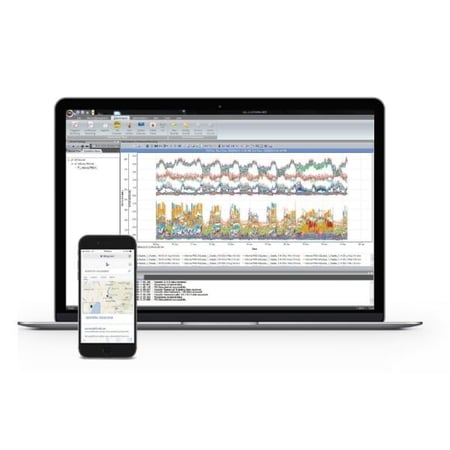
Understanding what actually happens during a disturbance requires reliable system data. Monitoring can help engineers identify voltage, frequency and power-quality events, assess equipment response and investigate whether actual behaviour aligns with expected performance.
Modelling needs to reflect the real connection.
The ability to demonstrate compliance depends on having appropriate models and technical information that represent the facility and its interaction with the network.
The wider network cannot be ignored.
As large IBLs become more concentrated, the combined response of multiple connections may become relevant to system security.
These considerations are not necessarily separate activities. They form part of a broader need for visibility into how large electrical loads behave as part of the power system.
Monitoring is becoming part of the bigger picture
The AEMC's final rule is one part of a broader program addressing the implications of rapidly increasing electricity demand from data centres.
Importantly, the AEMC published a consultation paper on Operational integration and visibility of large inverter-based loads on the same day as this final determination. That work is considering potential future requirements around areas including registration, real-time communications and monitoring, and the rate of change of active power.
This points to a broader direction for the industry.
As large IBLs become a more significant part of the NEM, having visibility into their electrical behaviour will become increasingly important — not only when a connection is being designed and approved, but also when investigating disturbances and managing the ongoing performance of the network.
For data centres and other large electrical facilities, this means measurement, monitoring and reliable technical data can play an increasingly important role alongside connection studies, modelling, protection and control engineering.
What should project teams consider now?
The final rule commenced on 12 November 2026. A six-month grace period applies to certain connection applications and plant alteration proposals that had already progressed sufficiently through the connection process when the rule commenced.
For new and developing large-load projects, it is therefore worth considering the implications of the new requirements early rather than treating them as a final-stage compliance exercise.
Key questions for project and engineering teams include:
- Is the proposed facility classified as a large IBL under the new framework?
- How will the facility respond to specified voltage and frequency disturbances?
- How will UPS, protection and control systems influence that response?
- What modelling will be required to demonstrate compliance?
- Could the facility's behaviour interact with other nearby IBL connections?
- What monitoring and measurement capabilities are needed to understand actual system performance?
- How will performance be verified during testing, commissioning and ongoing operation?
The answers will depend on the characteristics of each connection, its location and the requirements agreed with the relevant NSP and AEMO.
A more dynamic NEM requires greater visibility
The growth of data centres and other large inverter-based loads presents both an opportunity and a challenge for Australia's electricity system.
The AEMC's final rule is designed to support that growth while strengthening the technical framework needed to maintain power-system security and reliability. It does this by introducing clearer classification requirements, disturbance ride-through standards, instability requirements, proportionate modelling and compliance arrangements, and greater consideration of aggregate impacts.
For organisations involved in large-load connections, the practical takeaway is straightforward:
The question is no longer simply whether a large facility can connect to the grid. It is how that facility will behave as part of an increasingly dynamic power system.
Reliable measurement, monitoring and technical analysis can help engineers understand that behaviour, providing the visibility needed to make informed decisions about connection performance, power quality, protection and network reliability.
Insulect supports utilities, industrial operators, EPCs and electrical engineering teams with power-system monitoring and measurement solutions designed to provide greater visibility into electrical network performance. Contact us to discuss your monitoring and network reliability requirements.