

Strengthening Our Commitment to Safety, Environment and Quality
We’re proud to announce that Insulect has successfully achieved recertification for both ISO 45001 (Occupational Health and Safety) and ISO ...
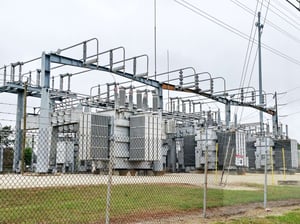
What is Power System Monitoring?
Power systems are the backbone of modern energy networks, made up of transformers, generators, and distribution infrastructure that deliver ...
Is Your Transformer Temperature Monitoring Accurate?
When it comes to power transformers, temperature monitoring is critical—but not all methods deliver the same level of accuracy. One ...
Why ISO Certifications Matter for Insulect and Its Clients
Ensuring high-quality, environmentally sustainable, and safe products and services is essential in the modern business landscape. For ...
Introducing Insulect’s New SF₆-Free Load Break Switch
Insulect recently launched its new epoxy-insulated, SF₆-free vacuum load break switch—an important step toward more sustainable switching ...
Which HV Switchgear Suits Australian Coastal Environments?
In Australian coastal and high-pollution environments (such as marine zones, heavy industrial hubs, or areas with high salinity and ...
How Can You Monitor the Condition of a Power Transformer?
Power transformers are critical assets in electricity networks, and monitoring their condition is essential for maintaining reliability, ...
How to Choose the Right Transformer Condition Monitoring Solution?
Power transformers are critical assets in Australia's electricity networks, renewable energy installations and industrial facilities. An ...
What Do Dissolved Gases in Transformer Oil Indicate?
Dissolved gases in transformer oil can provide valuable clues about the internal condition of a power transformer. By analysing the types, ...
How to Locate a Cable Fault on a Medium Voltage Distribution Network
A cable fault on a medium voltage (MV) distribution network can disrupt power supply, affect network reliability and require time-consuming ...