

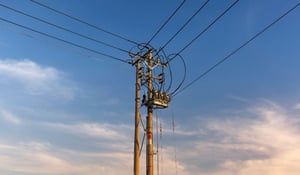
A cable fault on a medium voltage (MV) distribution network can disrupt power supply, affect network reliability and require time-consuming field investigations. Locating the fault quickly and accurately is essential to reduce outage duration, minimise troubleshooting time and help maintenance teams restore service safely.
But how do you locate a cable fault on an MV distribution network? The process depends on the type of fault, the network configuration, the cable characteristics and the fault-location technology available.
In this article, we explain the key steps involved in locating an MV cable fault and explore technologies that can help utilities identify fault locations more efficiently.
1. Identify the Fault and the Affected Feeder
The first step is to establish which part of the distribution network has been affected.
Protection relays, circuit breakers and monitoring systems can provide valuable information about the fault event, including the affected feeder and electrical measurements recorded during the incident. This information helps engineers narrow down the section of the network that requires investigation.
It is also important to determine the likely fault type. Common cable faults include:
- Short circuits: An unintended connection between conductors or between a conductor and earth.
- Earth faults: An electrical connection between a conductor and earth.
- Open-circuit faults: A break in a conductor that interrupts electrical continuity.
- Intermittent faults: Faults that occur under certain electrical or environmental conditions and may be difficult to reproduce.
Understanding the fault characteristics helps engineers select an appropriate fault-location method.
2. Estimate the Fault Location
Once the affected feeder and likely fault type have been identified, the next step is to estimate where the fault may have occurred along the cable route.
Several technologies can support this process.
Impedance-based fault location
Impedance-based methods use electrical measurements, such as voltage and current, to estimate the distance to a fault. The estimated distance can help engineers identify a section of the network to investigate.
The accuracy of the estimate can be affected by factors such as fault resistance, cable characteristics and network configuration. As a result, the estimated distance may need to be followed by additional field investigation.
Travelling-wave fault location
Travelling-wave technology detects the high-frequency waves generated when a fault occurs. By measuring the arrival times of these waves at monitoring points, a system can calculate the distance to the fault.
Some systems use measurements from both ends of a line, with accurately synchronised timestamps, to improve fault-location accuracy. This approach can help narrow down the search area along a cable route.
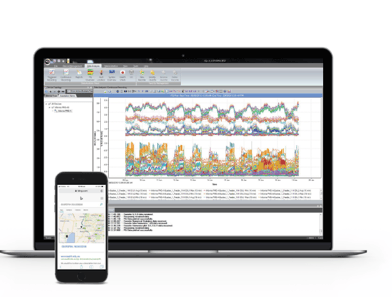
For example, the Qualitrol IDM+ supports an optional Travelling Wave System (TWS) for fault location. Its brochure specifies a stated accuracy of ±60 metres for the TWS option. However, the suitability of a particular configuration for an MV distribution network should be confirmed with the manufacturer.
Intelligent grid monitoring
Intelligent grid monitoring systems offer another approach. Rather than relying solely on measurements taken after a fault, these systems can analyse electrical events and network data to help identify where a fault has occurred.
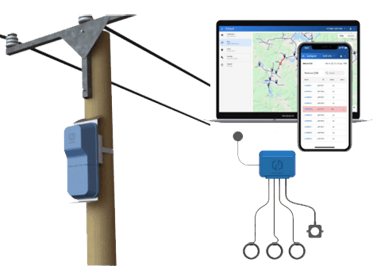
For example, Safegrid’s Intelligent Grid System® includes Smart Fault Location™ technology, which the product brochure describes as locating faults on a map to approximately ±100 metres. Its GridGuardian® technology analyses high-frequency transients and anomalies to detect grid events and help locate faults.
The capabilities of individual systems depend on their configuration and application. Utilities should confirm whether a solution supports their specific MV network, including underground cable sections.
3. Pinpoint the Fault in the Field
An estimated fault location does not always identify the exact physical point of damage. The next step is to narrow the search area and confirm the fault location before excavation or repair.
Depending on the fault and cable installation, field teams may use cable route tracing, suitable cable test equipment and other approved diagnostic techniques to investigate the suspected section.
For underground cables, the route must be established accurately, and the estimated distance must be interpreted in relation to the actual cable path rather than simply measuring a straight line on a map.
It is also important to distinguish between network-level fault location and physical fault pinpointing. A monitoring system may identify the likely fault area, while additional testing is required to determine the precise location of the damaged cable, joint or termination.
All testing and field investigation should be carried out by appropriately qualified personnel using procedures suitable for the network voltage and equipment involved.
4. Confirm the Fault and Restore the Network
Before repair work begins, the suspected fault location should be verified using appropriate diagnostic procedures.
Once the fault has been confirmed, the maintenance team can plan the repair, whether that involves repairing or replacing a cable section, joint or termination. After the repair, the cable should undergo the required testing and verification before being returned to service.
Recording the fault location, fault characteristics, repair details and relevant test results can also help utilities identify recurring problems and improve future maintenance planning.
5. Choose the Right Fault-Location Technology for Your Network
No single fault-location method is ideal for every MV distribution network. The most suitable solution depends on the network design, cable type, monitoring infrastructure, required accuracy and the information available during a fault event.
When evaluating a fault-location solution, consider the following questions:
- Network compatibility: Does the system support your operating voltage, cable types and network configuration?
- Location accuracy: How precisely can it estimate the fault location, and under what conditions?
- Monitoring requirements: Does it require equipment at one end of the cable or both ends? Is time synchronisation needed?
- Fault detection capabilities: Can it detect different fault types, including intermittent faults?
- Integration: Can the solution work with your existing protection, monitoring and network management systems?
- Operational requirements: What equipment, testing and field procedures are needed to confirm the fault and complete repairs?
It is particularly important to verify the manufacturer's stated performance for your specific application. Accuracy figures may depend on line length, system configuration, installation and operating conditions, so they should not be treated as universal guarantees.
Conclusion
Locating a cable fault on an MV distribution network involves more than identifying that a fault has occurred. Engineers need to determine the affected feeder, estimate the fault distance, narrow down the search area and verify the physical fault location before repairs can proceed.
Impedance-based methods, travelling-wave technology and intelligent grid monitoring can all support this process, depending on the network and application. Selecting a suitable solution can help utilities reduce fault-investigation time, improve maintenance efficiency and restore power more effectively.
Looking to improve cable fault location on your medium voltage distribution network?
Insulect helps utilities and power industry professionals explore monitoring and fault-location solutions suited to their network requirements. Whether you are investigating travelling-wave technology or intelligent grid monitoring, our team can help you understand the available options and identify what may be appropriate for your application. Contact Insulect to discuss your network and fault-location requirements.