

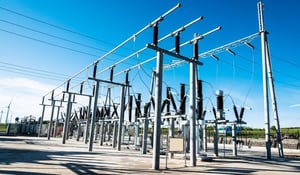
Selecting the right outdoor high voltage disconnector is an important decision for utility engineers, substation managers and project teams. These devices provide a clearly visible isolation point, helping ensure high-voltage equipment can be safely isolated during maintenance and inspection.
However, selecting a suitable disconnector involves more than matching a voltage rating. Electrical requirements, environmental conditions, substation layout, operating requirements and long-term support all need to be considered.
This guide outlines five key factors to consider when selecting outdoor high voltage disconnectors for substation applications.
1. Define the Required Isolation Function
The primary purpose of a disconnector is to provide visible electrical isolation.
Unlike relying solely on an electrical indication or digital status signal, a suitably designed outdoor disconnector provides a physical separation in the circuit that can be visually verified. This is particularly important when maintenance personnel need to work on high-voltage lines, transformers, busbars or other substation equipment.
Disconnectors are generally intended for isolation rather than interrupting fault currents. Therefore, the isolation function, operating sequence and interlocking requirements should be clearly defined during the specification stage.
For transmission and extra-high-voltage applications, disconnectors may be required across voltage classes ranging from approximately 145 kV to 550 kV, depending on the network and application.
The first step is therefore to establish:
- The system voltage
- The required isolation points
- Whether the application is line, transformer or busbar isolation
- Earthing requirements
- Switching and interlocking requirements
- Applicable technical and safety standards
A clear understanding of the isolation function provides the foundation for selecting the appropriate equipment.
2. Match Voltage and Current Ratings to the Application
Once the isolation requirements are established, the next step is to match the disconnector's electrical ratings to the system.
Outdoor high voltage disconnectors are available across a range of voltage and current classes. For example, equipment in the 145 kV class may be designed for continuous current ratings in the region of 1,250–3,150 A, while higher-voltage applications can require substantially greater current-carrying capability.
The continuous current rating should be selected according to the actual requirements of the installation, including expected loading and future operating conditions.
However, continuous current is not the only electrical characteristic to consider.
Depending on the application, the disconnector may also need to accommodate specific switching duties, such as:
- Small inductive current switching
- Small capacitive current switching
- Bus transfer current switching
- Short-duration fault withstand requirements
- Lightning impulse withstand requirements
For some applications, small inductive or capacitive currents may be in the range of 0.5–2 A, while short-circuit duration capabilities may need to withstand high fault currents for a specified period, such as 1–3 seconds.
The key consideration is to avoid selecting equipment based on voltage and continuous current alone. The complete set of electrical duties should be reviewed against the project requirements.
3. Consider Environmental and Site Conditions
Outdoor substation equipment is exposed to considerably more demanding conditions than indoor electrical equipment.
Weather, pollution, altitude, wind, ice, seismic activity and coastal environments can all influence disconnector performance and long-term reliability.
Pollution and creepage distance
Substations located in coastal areas or heavily industrial environments may experience significant levels of airborne contamination, including salt and industrial particulates.
Pollution can accumulate on insulator surfaces and, when combined with moisture, create a conductive path across the insulation surface. This can increase the risk of surface flashover.
For demanding environments, the appropriate pollution classification and creepage distance should therefore be considered during equipment selection.
Extended creepage distances can help maintain insulation performance under contaminated conditions.
Lightning and insulation withstand
Outdoor high-voltage equipment must also be designed to withstand transient overvoltages.
Lightning impulse withstand capability is particularly important for substations exposed to lightning activity. At higher voltage classes, lightning impulse withstand levels can reach approximately 1,800 kV, depending on the equipment rating and applicable specification.
The required insulation coordination should be assessed alongside the site's lightning exposure and overall substation protection design.
Mechanical and environmental stresses
Mechanical performance is another consideration where equipment may be exposed to high winds, ice loading, vibration or seismic activity.
Contact design can play an important role here. High-integrity contacts, for example, may incorporate features such as self-cleaning mechanisms, clamping forces and silver-plated contact surfaces to help maintain reliable electrical contact while reducing contact resistance and associated heating.
The environmental conditions at the installation site should therefore be established before finalising the disconnector specification.
4. Select the Right Configuration for the Substation Layout
There is no single disconnector configuration that is suitable for every substation.
The available space, bus arrangement, conductor configuration and required operating direction can all influence the most appropriate design.
Depending on the application, options may include:
- Horizontal centre-break configurations
- Vertical scissor-type configurations
- Single-arm telescopic configurations
- Three-post rollover or flip-type configurations
The choice is not simply about selecting the smallest or most familiar design. The disconnector needs to integrate effectively with the existing or planned substation layout.
For example, a vertical scissor configuration may be advantageous where footprint is limited, while another configuration may be more suitable for a particular bus arrangement or clearance requirement.
Consider earthing and operating mechanisms
Additional functionality should also be considered during the specification stage.
Questions to ask include:
- Is an integrated earthing switch required?
- Is earthing required on one or both sides of the disconnector?
- Will the disconnector be manually operated?
- Is motorised operation required?
- Does the system need remote operation?
- How will the disconnector integrate with protection, control and SCADA systems?
- Are specific switching duties required?
Considering these requirements early can help avoid costly design changes later in the project.
5. Look Beyond the Datasheet: Consider Lifecycle Support
A technically suitable disconnector is only one part of a successful project.
For complex substation projects, the supplier's engineering capability, testing, commissioning and ongoing technical support can be just as important as the equipment itself.
A comprehensive project approach may include:
Engineering and design
The equipment should be configured according to the project's electrical, mechanical and environmental requirements.
Procurement and logistics
Coordinating manufacturing, procurement and delivery is critical for maintaining project schedules.
Factory testing
Appropriate testing helps verify that the equipment meets the specified requirements before it reaches site.
Installation and commissioning
Professional commissioning helps confirm that the disconnector, operating mechanisms, controls and associated systems function correctly before energisation.
Ongoing technical support
Access to technical expertise can be particularly valuable when issues arise during installation, commissioning or operation.
For projects involving complex control and automation requirements, support may also extend to programmable logic controller (PLC) I/O, remote terminal units (RTUs) and integration with remote operating systems.
A Practical Checklist for Selecting Outdoor HV Disconnectors
Before finalising a disconnector specification, consider the following:
| Selection factor | Key questions |
|---|---|
| Voltage | What is the system and equipment voltage class? |
| Current | What continuous current rating is required? |
| Isolation | Where are visible isolation points required? |
| Switching duties | Are small inductive, capacitive or bus transfer currents involved? |
| Short-circuit withstand | What fault current and duration must the equipment withstand? |
| Insulation | What lightning impulse and other withstand levels are required? |
| Pollution | What pollution level and creepage distance are appropriate? |
| Environment | Are wind, ice, altitude, seismic or coastal conditions relevant? |
| Configuration | Which mechanical arrangement best suits the substation layout? |
| Earthing | Is an integrated earthing switch required, and where? |
| Operation | Is manual or motorised operation required? |
| Control | Does the equipment need remote or automated operation? |
| Lifecycle support | What engineering, testing, commissioning and technical support is available? |
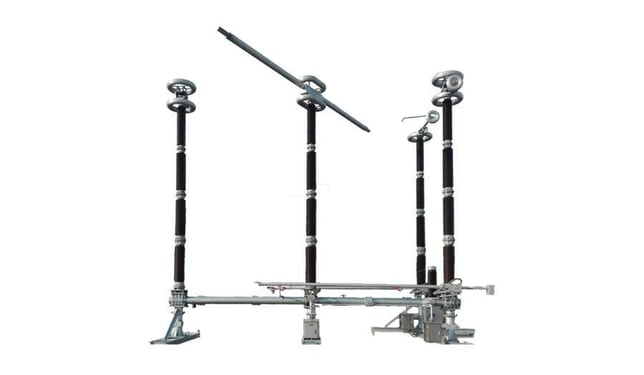
Choosing the Right HV Disconnector for Your Application
Selecting an outdoor high voltage disconnector requires a balance between electrical performance, environmental resilience, mechanical configuration and lifecycle support.
The right solution should not only meet the immediate technical specification but also integrate effectively into the substation design and provide reliable operation throughout its service life.
At Insulect, we supply outdoor high voltage disconnectors for demanding substation and transmission applications. Our team can support projects from equipment selection and engineering through to procurement, testing, commissioning and ongoing technical support.
Need help selecting the right outdoor HV disconnector for your project? Contact Insulect to discuss your application and technical requirements.