

When a fault occurs on a high-voltage power network, every millisecond matters. Engineers need more than an alarm indicating that something happened. They need accurate, high-resolution data to understand what happened, when it happened, and how the power system responded.
This is where Digital Fault Recorders (DFRs) play a critical role. As part of a modern power system monitoring platform, DFRs capture detailed electrical waveforms during network disturbances, providing engineers with the evidence needed to investigate faults, evaluate protection system performance, and improve network reliability.
For utilities, renewable energy projects, industrial facilities and transmission operators across Australia and New Zealand, DFR technology has become an essential tool for maintaining a resilient power network.
What Is a Digital Fault Recorder?
A Digital Fault Recorder (DFR) is a high-speed recording function designed to capture voltage, current and digital input signals whenever a disturbance occurs on the power system.
Unlike protection relays, whose primary role is to detect faults and initiate protection actions, a DFR records detailed oscillography that engineers can later analyse to reconstruct the sequence of events during a network disturbance.
Within the Qualitrol IDM+ platform, the DFR function can sample waveforms at up to 512 samples per cycle. On Australia's 50 Hz electricity network, this equates to a waveform sampling rate of 25.6 kHz, enabling engineers to capture sub-cycle electrical behaviour with exceptional detail.
Depending on system configuration, the recorder can capture both pre-fault and post-fault data, with recording durations extending to approximately 30 seconds.
Why High-Speed Waveform Recording Matters
Electrical faults often develop and clear within only a few milliseconds.
Although protection relays process these signals to make rapid operating decisions, they typically apply filtering designed for protection rather than detailed analysis. A dedicated DFR preserves the complete waveform, allowing engineers to examine the actual electrical behaviour during an event.
This level of detail helps investigate:
- Fault current characteristics
- Current transformer performance
- Capacitor-switching transients
- FACTS equipment interactions
- Inverter-based resource (IBR) behaviour
- Protection system operation
Having access to high-resolution oscillography enables protection engineers to analyse events far beyond what relay event summaries alone can provide.
Understanding What Happened Before and After the Fault
One of the greatest advantages of a DFR is its ability to record both pre-trigger and post-trigger data.
Rather than capturing only the fault itself, the recorder provides valuable context showing the electrical conditions leading up to the event and how the system behaved immediately afterwards.
This information allows engineers to:
- Investigate the likely cause of the disturbance
- Verify whether protection schemes operated correctly
- Assess how effectively the power system recovered
- Identify abnormal system behaviour that may require further investigation
Instead of directly identifying the physical cause of a fault, DFR records provide the electrical evidence that supports a thorough engineering investigation.
Precise Time Synchronisation Across the Network
Modern transmission systems span hundreds (or even thousands) of kilometres.
When disturbances involve multiple substations, generators or transmission lines, engineers must accurately align records from different locations to understand how the event propagated across the network.
Time-synchronised DFR records make this possible by enabling engineers to correlate events occurring across geographically separated assets.
This capability is particularly valuable for analysing:
- Wide-area transmission disturbances
- Protection performance
- Interconnector events
- System-wide behaviour across Australia's National Electricity Market (NEM)
Working Alongside Other Monitoring Technologies
A modern monitoring platform relies on several complementary recording functions, each providing different insights into network performance.
Within the Qualitrol IDM+ platform:
| Function | Primary Purpose |
|---|---|
| Digital Fault Recorder (DFR) | Captures high-speed fault waveforms |
| Dynamic Disturbance Recording (DDR) | Records slower dynamic system behaviour |
| Sequence of Events (SOE) | Records time-stamped digital status changes |
| Power Quality (PQ) | Supports compliance monitoring and event analysis |
| Phasor Measurement Unit (PMU) | Provides time-synchronised phasor measurements |
| Travelling Wave Fault Location | Supports accurate transmission-line fault location where configured |
Together, these complementary functions provide engineers with a comprehensive understanding of network disturbances across multiple timescales.
Evaluating Protection System Performance
DFRs do more than record electrical waveforms. They also capture digital inputs from protection relays, communication schemes and circuit breaker auxiliary contacts.
When these records are correlated with Sequence of Events (SOE) data, engineers can review:
- Circuit breaker operating times
- Protection relay performance
- Communication-assisted protection schemes
- Overall protection system coordination
This information supports protection-performance investigations and helps utilities continuously improve network reliability.
Standardised Data for Faster Engineering Analysis
Industry-standard file formats make DFR records easy to analyse and share.
Most DFR systems export recordings using the COMTRADE standard, allowing engineers to use a wide range of analysis software for:
- Protection-performance reviews
- Relay testing
- Power system model validation
- Event reporting
- Post-fault engineering investigations
When integrated with Qualitrol iQ+, records from multiple substations can be centrally retrieved, managed and compared through a single platform, streamlining engineering workflows and reducing investigation time.
Supporting Reliable Power Networks Across Australia and New Zealand
Australia's electricity network continues to evolve with increasing renewable energy integration, inverter-based resources and expanding transmission infrastructure. This growing complexity is driving a greater need for accurate, high-speed fault analysis.
Digital Fault Recorders provide the detailed evidence engineers need to understand network disturbances, verify protection system performance and support ongoing improvements in power system reliability.
By combining high-speed waveform recording with complementary monitoring technologies, DFRs enable utilities and industrial operators to make better-informed decisions following critical power system events.
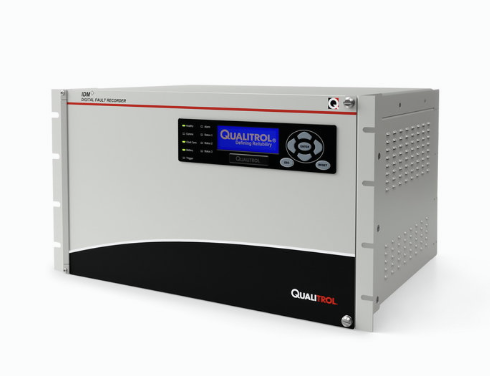
Improve Network Visibility with Local DFR Expertise
Insulect supplies Qualitrol DFR solutions for transmission utilities, power generators, renewable energy projects, mining operations and large industrial facilities across Australia and New Zealand.
Our solutions support fault investigation, protection-performance analysis, transmission-event review, and provide valuable evidence for compliance with National Electricity Rules (NER) and Australian Energy Market Operator (AEMO) requirements where appropriate.
Whether you're upgrading an existing monitoring system or planning a new high-voltage installation, contact us to discuss your requirements. We can help you implement a solution that delivers the visibility and insight needed to improve network reliability and operational performance.