

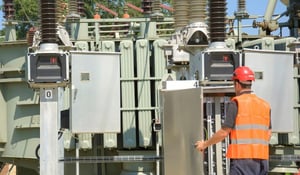
Transformer bushings are critical components that allow high-voltage conductors to pass safely through the grounded transformer tank. Their insulation must remain reliable under continuous electrical, thermal and environmental stress. If a bushing deteriorates, it can lead to insulation breakdown, transformer damage and an unexpected outage.
The most effective way to detect transformer bushing deterioration before failure is to combine regular visual inspections, electrical diagnostic testing and continuous condition monitoring. Measurements such as capacitance and dielectric dissipation factor (tan delta or power factor), together with checks for oil leakage, physical damage and abnormal temperature, can reveal developing problems before they become critical.
Importantly, bushing condition should be assessed through trends over time, not just a single test result.
What Causes Transformer Bushings to Deteriorate?
Transformer bushings are exposed to electrical, thermal and environmental stresses throughout their service life. Depending on their design and insulation materials, several factors can contribute to deterioration.
Common causes include:
- Moisture ingress: Damaged seals, deteriorated gaskets or cracks can allow moisture to enter the insulation system, reducing its dielectric strength.
- Insulation ageing: Continuous electrical and thermal stress gradually affects the insulating materials, increasing dielectric losses and the risk of breakdown.
- Partial discharge (PD): Localised electrical discharges can develop within insulation defects, potentially causing progressive deterioration.
- Thermal stress: Excessive loading, poor electrical connections or inadequate cooling can increase operating temperatures and accelerate insulation ageing.
- Contamination and environmental exposure: Pollution, salt deposits, moisture and other contaminants can affect the external insulation surface and increase the risk of surface flashover.
- Mechanical damage: Cracks, damaged sheds and other physical defects can compromise insulation performance and allow moisture to enter.
Understanding these causes helps maintenance personnel select appropriate inspection and testing methods.
What Are the Early Warning Signs of Bushing Deterioration?
Some bushing defects are visible, while others develop internally and require electrical testing or monitoring to identify.
1. Changes in Capacitance
Capacitance is an important measurement for assessing the condition of capacitance-graded bushings.
These bushings contain multiple layers of insulation designed to distribute the electrical field evenly. If insulation layers become damaged or short-circuited, the effective capacitance can change.
A noticeable increase in capacitance may indicate deterioration or a change in the internal capacitive structure. Comparing measurements against the original nameplate value and previous test results can help identify developing problems.
2. Increasing Tan Delta or Power Factor
Tan delta, also known as dielectric dissipation factor or power factor, measures dielectric losses within the insulation system.
As insulation deteriorates, moisture enters or contamination increases, dielectric losses may rise. An increasing tan delta or power factor reading can therefore indicate a change in insulation condition.
For capacitance-graded bushings, measurements may include:
- C1: Assesses the main insulation between the central conductor and the voltage or test tap.
- C2: Where applicable, assesses the insulation between the tap and the grounded flange.
Changes in either measurement can provide useful diagnostic information. However, results should be interpreted against the bushing design, manufacturer limits, test conditions and historical measurements.
3. Oil Leakage or Abnormal Oil Level
For oil-filled bushings, oil leakage or an abnormal oil level can indicate deteriorating seals, damaged gaskets or an internal problem.
A reduction in oil level may compromise the insulation system and increase the risk of internal deterioration.
During routine inspections, maintenance personnel should check for:
- Visible oil leakage around seals, gaskets and connections.
- Changes in the oil level indicator.
- Signs of oil contamination or discolouration, where visible.
- Deterioration around the bushing mounting and sealing areas.
A leak should not be treated as a minor housekeeping issue. It may indicate a loss of insulation integrity and should be investigated in accordance with the manufacturer's instructions.
4. Cracks, Surface Contamination and Physical Damage
The external condition of a bushing can provide useful early warning signs.
Cracks in porcelain or composite housings, damaged sheds, corrosion and accumulated contamination can compromise the external insulation system.
Contamination combined with moisture can increase surface leakage current and the risk of flashover, particularly in areas exposed to salt, industrial pollution or high humidity.
Regular visual inspections help identify these issues before they develop into more serious problems.
5. Abnormal Temperature or Hot Spots
Abnormal heating around a bushing may indicate a poor electrical connection, excessive contact resistance or other developing defects.
Infrared thermography can help identify unusual temperature patterns around bushing terminals, connectors and associated components.
However, a hot spot does not automatically mean the bushing insulation is deteriorating. It may be caused by an external connection or loading condition, so further investigation is required to identify the source.
Which Tests Can Detect Bushing Deterioration?
Visual inspections are useful, but they cannot identify every internal insulation defect. Electrical diagnostic testing provides additional information about the condition of the bushing.
The following methods are commonly used as part of a bushing assessment programme.
Capacitance and Tan Delta Testing
Capacitance and tan delta testing are among the key diagnostic methods for assessing the dielectric condition of capacitance-graded bushings.
The measurements help identify changes in insulation characteristics that may be associated with moisture ingress, contamination, ageing or damage to the capacitive grading structure.
Results should be compared with:
- Original factory or commissioning test results.
- Bushing nameplate capacitance values.
- Previous maintenance test results.
- Manufacturer-recommended limits and evaluation criteria.
A consistent increase in tan delta or a significant change in capacitance should prompt further investigation.
Partial Discharge Testing
Partial discharge is a localised electrical discharge that does not completely bridge the insulation between conductors.
It can occur within insulation voids, at interfaces or around defects where the local electrical field is sufficiently high.
Depending on the bushing design and defect location, partial discharge activity may indicate developing insulation problems.
Electrical and other specialised partial discharge measurement techniques can help identify and assess this activity. However, not every bushing defect produces detectable PD, and a normal PD result does not rule out all forms of deterioration.
Infrared Thermography
Infrared thermography is a non-invasive inspection method used to identify abnormal temperature patterns.
It can help maintenance personnel identify:
- Overheating at terminal connections.
- Uneven heating between phases.
- Abnormal temperature differences between similar components.
- Potential connection or contact problems.
Thermal inspection is particularly useful when performed under suitable operating conditions and compared with previous inspection results.
Oil and Insulation Assessment
For oil-filled bushings, oil condition and level should be assessed in accordance with the bushing manufacturer's recommendations.
Where sampling is permitted and appropriate for the design, oil testing may provide additional information about the insulating medium.
It is important to distinguish between bushing oil analysis and transformer main-tank dissolved gas analysis (DGA). Main-tank DGA primarily assesses the transformer tank's oil-paper insulation system; it should not automatically be treated as a direct diagnostic test of an independently sealed bushing.
Can Continuous Bushing Monitoring Detect Problems Earlier?
Periodic testing provides valuable information, but it only captures the bushing's condition at the time of the test.
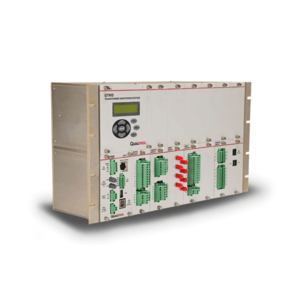
Continuous online monitoring can provide a more frequent view of bushing performance while the transformer remains in service.
Depending on the monitoring system and bushing design, measurements may include:
- Capacitance changes.
- Tan delta or power factor.
- Leakage current.
- Other electrical parameters used to assess bushing condition.
By tracking these measurements over time, monitoring systems can help identify gradual changes or abnormal trends that may not be apparent during periodic inspections.
For example, if a bushing's capacitance or dielectric loss begins to increase, an online monitoring system may identify the trend and alert maintenance personnel for further investigation.
This can help utilities prioritise inspections, plan maintenance activities and reduce the likelihood of unexpected equipment failure.
Online monitoring does not replace periodic inspections or diagnostic testing. It provides additional condition information to support maintenance decisions.
How Should Maintenance Teams Respond to Early Warning Signs?
Detecting a change in bushing condition is only the first step. The next priority is to determine its significance and decide what action is appropriate.
A practical assessment process may include:
- Review the measurement history. Compare current capacitance, tan delta and other available readings against commissioning results, nameplate data and previous tests.
- Inspect the physical condition. Check for oil leakage, abnormal oil levels, cracks, contamination and signs of overheating.
- Investigate unusual readings. Repeat or extend diagnostic testing where appropriate, taking account of test conditions and measurement uncertainty.
- Consult the manufacturer. Confirm the applicable limits, test methods and recommended actions for the specific bushing design.
- Assess operational risk. Consider the severity and rate of change, the criticality of the transformer and the consequences of a potential failure.
- Plan the appropriate maintenance response. Depending on the findings, this may involve increased monitoring, further testing, repair or bushing replacement.
For example, a bushing with a gradually increasing tan delta reading may require more frequent testing and further investigation. If the capacitance also changes significantly, the findings may indicate a more serious internal defect.
In contrast, an isolated hot spot at a terminal connection may be caused by a loose or deteriorated external connection rather than internal bushing insulation. Identifying the actual cause is essential before deciding on corrective action.
The appropriate response should always be based on the complete diagnostic picture, manufacturer recommendations and the organisation's safety and operating procedures.
Which Standards Apply to Transformer Bushing Assessment?
Several IEEE and IEC standards provide guidance on bushing design, testing and condition assessment.
The following are particularly relevant:
IEEE C57.19.00-2023 – IEEE Standard for General Requirements and Test Procedure for Power Apparatus Bushings
This standard covers general requirements and test procedures for specified power apparatus bushings used with liquid-immersed transformers and reactors. It provides a reference for bushing characteristics and testing requirements.
IEEE C57.19.100-2025 – IEEE Guide for Application of Power Apparatus Bushings
This guide provides application guidance for outdoor power apparatus bushings used with power transformers, circuit breakers and isolated-phase bus. It is relevant when considering bushing application and operating conditions.
IEEE C57.152-2025 – IEEE Guide for Diagnostic Field Testing of Liquid-Filled Power Transformers, Regulators, and Reactors
This guide describes diagnostic field testing for liquid-filled power transformers and related equipment. It emphasises interpreting multiple test results together and consulting manufacturer acceptance criteria. It provides useful context for transformer field assessment, including the evaluation of associated components.
IEC 60137:2017 – Insulated Bushings for Alternating Voltages Above 1 000 V
This standard specifies the characteristics and tests for insulated bushings used in electrical apparatus, including transformers and switchgear. It includes requirements for dielectric dissipation factor, capacitance and partial discharge testing.
These standards provide important technical references, but they do not establish one universal alarm threshold for every bushing. Test limits and maintenance decisions should take account of the bushing type, insulation technology, manufacturer specifications and historical performance.
How Insulect Supports Transformer Bushing Condition Monitoring
Detecting bushing deterioration early requires reliable measurements and the ability to interpret changes in equipment condition.
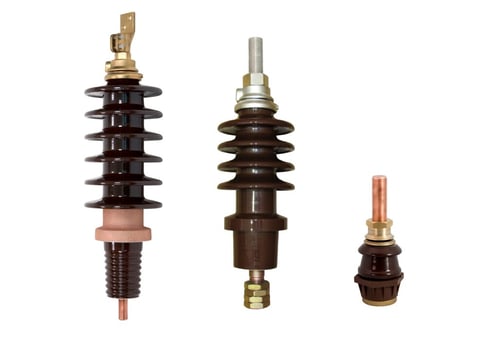
Insulect supplies transformer monitoring and bushing solutions to support asset condition assessment and maintenance planning. Through its range of transformer monitoring technologies, including solutions from Qualitrol, Insulect can help utilities and industrial operators improve visibility of transformer and bushing condition.
For organisations looking to strengthen their transformer maintenance strategy, combining appropriate bushing diagnostic testing with ongoing condition monitoring can provide valuable insight into asset health and help support more informed maintenance decisions.
Explore Insulect Transformer Monitoring Solutions >>
Explore Insulect Bushing Solutions >>
Frequently Asked Questions
1. What is the most reliable way to detect transformer bushing deterioration?
There is no single test that identifies every type of bushing defect. A combination of capacitance and tan delta testing, visual inspections, partial discharge assessment where appropriate, and continuous condition monitoring provides a more comprehensive assessment.
2. What does an increase in bushing tan delta mean?
An increase in tan delta indicates higher dielectric losses in the insulation system. It may be associated with moisture ingress, contamination or insulation ageing. The result should be compared with previous measurements and manufacturer guidance before determining the cause or severity.
3. What does a change in bushing capacitance indicate?
A change in capacitance may indicate a physical change in the internal capacitive grading structure, such as damaged or short-circuited layers. A significant deviation from the nameplate or baseline value should be investigated.
4. Can a transformer bushing fail without showing visible damage?
Yes. Internal insulation deterioration may develop without obvious external signs. This is why electrical diagnostic testing and condition monitoring are important alongside visual inspections.
5. How often should transformer bushings be tested?
Testing frequency depends on the bushing design, age, operating conditions, criticality and previous condition assessment results. Asset owners should follow manufacturer recommendations and their own maintenance programmes. Bushings showing abnormal or changing test results may require more frequent assessment.
6. Can online monitoring replace periodic bushing testing?
No. Online monitoring provides ongoing information about selected operating parameters, while periodic diagnostic testing can assess additional aspects of insulation condition. Both methods can complement each other as part of a broader asset management strategy.
7. When should a transformer bushing be replaced?
Replacement may be necessary when test results indicate serious insulation deterioration, capacitance changes suggest internal damage, physical defects compromise insulation integrity, or the manufacturer recommends removal from service. Decisions should be based on a complete assessment of the bushing's condition and operational risk.