

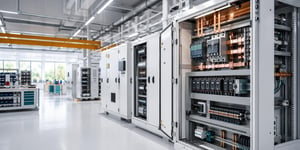
Switchgear and switchboards are essential components of electrical power distribution systems. They house and connect electrical equipment used to control, protect and distribute power across industrial facilities, commercial buildings and electricity networks.
Within these assemblies, electrical insulation helps separate conductive components, maintain electrical clearances and reduce the risk of unintended current paths. Selecting suitable insulating materials is therefore an important part of equipment design, manufacturing and long-term operational reliability.
However, insulation requirements vary depending on the equipment configuration, operating voltage, environmental conditions and mechanical demands. Understanding the role of insulation and the factors that influence material selection can help engineers and manufacturers make informed specification decisions.
What Is the Role of Electrical Insulation in Switchgear and Switchboards?
Switchgear and switchboards contain conductive components, including busbars, connections and other electrical parts that may operate at different electrical potentials. Insulating materials help maintain the required separation between these components and between live parts and grounded structures.
Depending on the assembly design, insulation materials may perform several functions.
1. Maintaining electrical separation
Insulation helps prevent unintended electrical contact between conductive components. Its properties and placement contribute to the assembly's overall dielectric performance.
The required insulation depends on the equipment's electrical design, including operating voltage, clearances, creepage distances and applicable standards.
Insulating materials must be selected as part of the complete assembly design rather than treated as independent components.
2. Supporting conductive components
Some insulating components also provide mechanical support for busbars and other electrical parts.
Depending on the design, insulating boards, supports and fabricated components may help maintain the position and separation of conductors. They may also need to withstand mechanical forces arising during normal operation, installation or short-circuit events.
The required mechanical properties depend on the component's function and the assembly's design.
3. Supporting operational reliability
Insulation performance can influence the reliability of an electrical assembly. Unsuitable materials, contamination, moisture, damage or deterioration can compromise insulation performance and contribute to electrical faults.
Choosing materials appropriate for the intended application, combined with sound manufacturing practices and suitable maintenance, helps manage these risks.
4. Withstanding operating conditions
Switchgear and switchboards may operate in environments where temperature variations, humidity, dust, chemical exposure or other conditions affect material performance.
Insulating materials need to be suitable for the environment in which the assembly will be installed and operated. The enclosure design and installation conditions also influence the stresses experienced by the insulation.
Common Insulating Materials Used in Electrical Assemblies
Electrical insulation materials are available in different compositions and forms. The appropriate choice depends on the assembly design, required performance and intended operating environment.
Rigid insulating boards
Rigid insulating boards can be used in suitable electrical assemblies where a combination of electrical insulation and mechanical stability is required.
Material selection should account for dielectric properties, mechanical strength, temperature capability and the component's intended function.
Glass-reinforced and laminated materials
Glass-reinforced and laminated materials combine reinforcing constituents with a binder or resin system to achieve specific performance characteristics.
Examples include G10, G11, FR4 and GPO-3 materials. Their properties vary by grade and construction, so engineers should consult the relevant technical datasheets before specifying a material.
Other composite insulation materials
Other engineered materials, including selected Durostone grades and Bakelite, may be suitable for particular electrical and industrial applications.
The suitability of each material depends on its individual properties and the requirements of the equipment. Products within the same broad material family are not necessarily interchangeable.
Fabricated insulation components
Insulating materials may be supplied as sheets, boards, tubes, supports or other shaped components, depending on the application.
The final component's dimensions, tolerances, surface condition and installation method can influence its suitability. Where machining or fabrication is required, these requirements should be considered alongside the material's electrical and mechanical properties.
What Factors Should Engineers Consider When Specifying Insulation?
Selecting an insulating material for switchgear or a switchboard requires a clear understanding of both the material properties and the operating requirements of the complete assembly.
1. Operating voltage and dielectric requirements
The material must be suitable for the electrical stresses it will experience.
Engineers should consider the assembly's rated voltage, insulation coordination requirements, required clearances and creepage distances, as well as relevant power-frequency and impulse withstand requirements where applicable.
The required performance depends on the equipment design and applicable standards. A material's general description alone is not sufficient to establish its suitability.
2. Mechanical strength and short-circuit forces
Busbars and other conductors can experience significant mechanical forces during short-circuit events.
Where an insulating component provides structural support, its mechanical properties and mounting arrangement must be appropriate for the forces expected in the assembly.
Engineers should consider the component's geometry, support spacing, fastening method and the overall mechanical design. Material properties should be evaluated alongside assembly-level verification requirements.
3. Temperature and thermal performance
Electrical equipment generates heat during operation. Temperature can influence the properties and long-term performance of insulating materials.
When specifying insulation, consider the expected operating temperature, potential temperature variations, proximity to heat sources and the material's specified thermal capability.
The thermal performance of the complete assembly also depends on factors such as current loading, ventilation and enclosure design.
4. Environmental conditions
The installation environment can influence insulation performance over time.
Consider potential exposure to:
- Moisture and humidity.
- Dust and airborne contamination.
- Chemicals and industrial pollutants.
- Temperature fluctuations.
- Other environmental conditions specific to the installation.
Material selection should account for the actual operating environment, together with the protection provided by the enclosure and any relevant maintenance requirements.
5. Dimensional accuracy and manufacturing requirements
Insulating components must fit the intended assembly and maintain the required electrical clearances.
Dimensions, thickness, tolerances, hole positions and surface condition may all affect component suitability. Manufacturing and installation processes should preserve the characteristics required by the design.
Where custom-shaped parts are required, confirm that the selected material can accommodate the intended manufacturing process and final component requirements.
6. Applicable standards and verification
Insulation selection must align with the applicable equipment standards, design specifications and project requirements.
For low-voltage switchgear and controlgear assemblies, IEC 61439 is an important standards series. Other equipment may fall under different standards, including requirements relevant to high-voltage switchgear.
The applicable standard and edition should be confirmed for the specific equipment. Engineers should also verify the required insulation performance through the appropriate design checks, tests and assembly-level verification.
Why Material Selection Should Be Part of the Overall Design
Choosing an insulating material based on a single property can overlook other requirements that affect the complete assembly.
For example, a material with suitable dielectric properties may not provide the mechanical performance required for a particular support. Similarly, a material that performs well under one set of environmental conditions may not be appropriate for another installation.
A more effective approach considers the interaction between material properties, component design, manufacturing processes and operating conditions.
Before finalising a specification, engineers and manufacturers should:
- Define the component's function within the assembly.
- Establish the electrical, mechanical, thermal and environmental requirements.
- Compare suitable material grades using verified technical documentation.
- Confirm dimensions, manufacturing requirements and installation conditions.
- Check compliance with applicable standards and assembly verification requirements.
This process helps ensure that the selected insulation is appropriate for its intended role within the equipment.
Explore Electrical Insulation Materials with Insulect
Insulect supplies electrical insulation materials and components for industrial and electrical applications, including insulating boards and composite materials such as G10, G11, FR4 and GPO-3, subject to the available grades and product specifications.
For switchgear manufacturers, switchboard builders and electrical equipment OEMs, selecting the right material begins with understanding the assembly's design and performance requirements.
Explore Insulect's industrial product range to learn more about available materials and components, or contact Insulect to discuss your application requirements.