

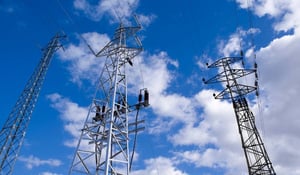
Australian medium-voltage networks require specific types of surge arrestors and load break switches that adhere to local standards and are designed for the country’s challenging environmental conditions. Medium voltage in Australia generally spans from 11 kV to 33 kV, though some equipment can extend up to 52 kV.
Surge Arrestors
For Australian medium-voltage networks, Metal Oxide Varistor (MOV) type surge arrestors with polymeric housings are predominantly used and recommended. These are preferred over older silicon carbide (SiC) arrestors with porcelain housings, which are being phased out due to lower performance, higher failure rates, and increased fire risk, especially in bushfire-prone regions.
Key characteristics and compliance for surge arrestors include:
- Standards Compliance Australian surge arrestors typically comply with AS 1307.2-1996 (R2015), IEC 60099-4, ANSI/IEEE C62.11, and the AS/NZS 61643 and IEC 61643 classifications for surge protection devices.
- Spark-Free Design Class A spark-free polymeric designs are critical for installations in bushfire-prone and environmentally sensitive areas.
- Voltage and Current Ratings They are available with voltage ratings ranging from 1 kV to 52 kV, and discharge current ratings of 5 kA or 10 kA.
- REFCL Compatibility Post-2017, the implementation of Rapid Earth Fault Current Limiter (REFCL) technology has driven the replacement of surge arrestors to ensure they can withstand elevated phase-to-ground voltages, specifically up to 24.2 kV for 22 kV networks.
- Durability Arrestors are built to perform in harsh Australian conditions, including high fire risk, high moisture, and extreme temperatures, with fully encapsulated HTV silicone rubber for long-term weather and pollution resistance.
- Maintenance Polymeric housings reduce failure modes by minimizing moisture ingress and eliminating seals. For higher voltage arrestors (220-500 kV), on-line leakage current monitoring can be used to assess their health.
Load Break Switches
Load break switches in Australian medium-voltage networks are crucial for safely interrupting and isolating electrical circuits under load conditions. They are distinct from disconnectors (isolators), which are designed for off-load isolation only.
Common types and specifications include:
Standards Compliance
These switches are generally designed and tested in accordance with AS 62271.102 / IEC 62271.102 and IEC 62271-103.
Voltage and Current Ratings
Medium-voltage load break switches typically operate between 3 kV and 36 kV, with current ratings up to 1250A.
Types of Load Break Switches
- Air Break Switches (ABS): Widely used for overhead distribution networks, providing visible isolation and switching for applications such as pole top or mid-pole mounting. They offer modular design flexibility, load break capability, and options for motorized or SCADA integration.
- Vacuum Load Break Switches: Popular for their fast operation, low maintenance, high dielectric strength, and environmental friendliness as they don’t use oil or gas.
- SF6 Load Break Switches: Utilize sulfur hexafluoride gas for arc extinction, offering compactness and high reliability in substations. However, there is a move towards SF6-free alternatives that use compressed dry air as the insulating medium.
- Solid Dielectric Load Break Switches: Employ solid insulating materials like epoxy resin, resulting in compact, environmentally friendly, and low-maintenance designs suitable for modern medium-voltage distribution systems.
- Oil Break Switches: Utilize insulating oil for arc quenching and are typically found in indoor substations.
Key Features
Load break switches can include features like visible break indications, positive break indications, remote trip options, and enclosed designs for enhanced safety and operational flexibility. Many are designed for harsh environments with arc fault containment, modularity, and advanced protection, some even incorporating “Arc-killer” technology to extinguish faults rapidly.
Application
They are often paired with high-voltage fuses to provide short-circuit protection, particularly in ring main units and compact transformer substations, offering an economical and effective combined device.
Selecting the right MV equipment starts with expert support
Ready to select the right surge arrestors and load break switches for your medium-voltage network? Insulect supplies a trusted range of MV protection and switching solutions to the Australian and New Zealand markets, helping utilities, contractors, and network operators improve reliability, safety, and asset performance. Our team can support you with product selection, technical guidance, and solutions suited to local network requirements. Contact Insulect today to discuss your medium-voltage application and find the right equipment for your project.