

Selecting the right cable link box can improve fault protection, reduce sheath losses, simplify maintenance, and extend the operational life of underground cable systems. But with various designs and configurations available, how do you determine which cable link boxes are best suited to your network?
What Is a Cable Link Box?
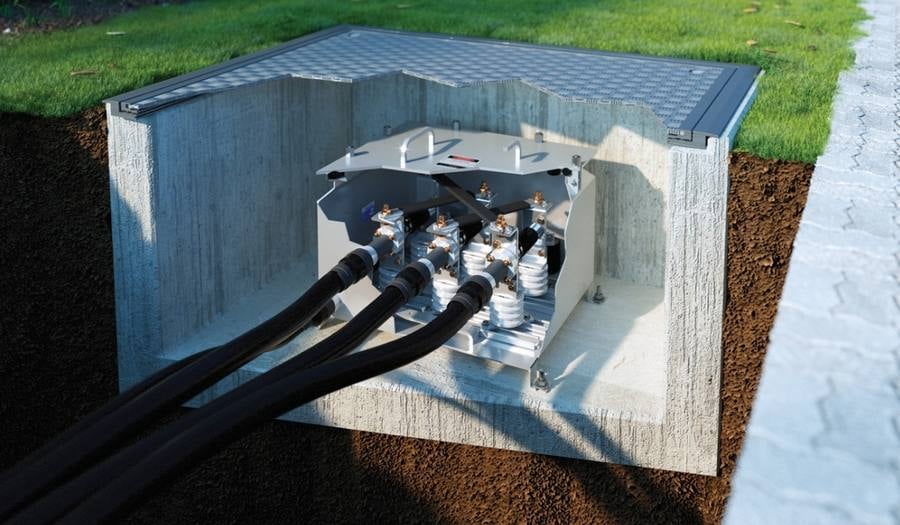
A cable link box is an enclosure installed within underground HV cable systems to provide access to cable sheath bonding connections. These boxes allow utilities and asset owners to implement various sheath bonding arrangements while providing a convenient location for testing, monitoring, and maintenance.
Link boxes are commonly used in transmission and distribution networks operating from 11 kV through to 500 kV and above.
Depending on the application, a cable link box may contain:
- Sheath bonding links
- Earth connections
- Surge voltage limiters (SVLs)
- Test points
- Monitoring equipment
Why Cable Link Boxes Matter
The metallic sheath of an HV cable can carry induced voltages and circulating currents. If not properly managed, these currents can:
- Increase power losses
- Cause sheath overheating
- Reduce cable ampacity
- Accelerate insulation ageing
- Create hazardous touch voltages during faults
Properly designed link boxes help manage these issues by enabling effective sheath bonding schemes and providing protection against transient overvoltages.
Key Features of a High-Quality Cable Link Box
When evaluating cable link boxes for underground HV networks, several characteristics should be considered.
1. Robust Environmental Protection
Underground installations are frequently exposed to moisture, flooding, dust, UV radiation, and corrosive environments.
The best cable link boxes feature:
- High IP-rated enclosures (typically IP65 or higher)
- Corrosion-resistant materials such as stainless steel or marine-grade aluminium
- UV-stabilised components
- Long-life sealing systems
A durable enclosure reduces maintenance requirements and improves asset longevity.
2. Safe and Accessible Design
Maintenance crews need safe access to bonding links and testing points without unnecessary complexity.
Look for designs that offer:
- Clearly labelled terminals
- Easy access to bonding links
- Secure lockable doors
- Touch-safe internal arrangements
- Adequate working space for testing and maintenance
Well-designed link boxes can significantly reduce field maintenance time and improve personnel safety.
3. Integrated Surge Voltage Limiter Protection
Modern underground cable systems often use cross-bonding or single-point bonding arrangements that require surge protection.
Integrated SVLs help protect cable sheaths from transient overvoltages caused by:
- Lightning strikes
- Switching operations
- Fault conditions
- Network disturbances
Cable link boxes that accommodate or integrate SVLs provide a more complete protection solution and simplify installation.
4. Flexibility for Different Bonding Schemes
Not all cable circuits use the same sheath bonding arrangement.
The best cable link boxes support:
Single-Point Bonding
Used on shorter cable routes where sheath currents must be minimised.
Benefits:
- Reduced sheath losses
- Improved cable ampacity
- Simpler network design
Solid Bonding
Commonly used on shorter circuits where induced voltages are less significant.
Benefits:
- Lower installation cost
- Straightforward design
Cross-Bonding
Often used on longer transmission cable circuits.
Benefits:
- Minimises circulating sheath currents
- Reduces losses
- Maximises cable rating
A flexible link box design allows utilities to standardise equipment across multiple projects while supporting different bonding requirements.
5. Reliable Internal Connections
The enclosure itself is only part of the solution. Internal components must also withstand decades of service.
Important features include:
- High-conductivity copper bars
- Corrosion-resistant terminals
- Secure bolted connections
- Robust earthing arrangements
- Vibration-resistant hardware
Poor internal connections can lead to increased resistance, overheating, and maintenance issues.
Selecting Cable Link Boxes for Different Applications
Utility Transmission Networks
Transmission operators typically require:
- Cross-bonding capability
- Integrated SVL mounting
- High fault-current withstand ratings
- Long-term reliability
These applications prioritise performance and durability over initial purchase price.
Distribution Networks
Distribution utilities often seek:
- Standardised designs
- Easy installation
- Reduced maintenance requirements
- Cost-effective lifecycle performance
Modular link box systems can provide flexibility while simplifying inventory management.
Renewable Energy Projects
Wind farms, solar farms, and battery energy storage systems increasingly rely on underground HV cable networks.
For these projects, cable link boxes should offer:
- Compact footprints
- Corrosion resistance
- Rapid installation
- Compatibility with long cable routes
Industrial Facilities
Mining operations, ports, petrochemical plants, and heavy industry often operate in harsh environments.
Recommended features include:
- Stainless steel enclosures
- Enhanced corrosion protection
- High mechanical strength
- Customisable configurations
Beyond Purchase Price: Focus on Lifecycle Value
While lower-cost link boxes may reduce initial project expenditure, they can increase maintenance costs and reliability risks over the asset's life.
When evaluating solutions, consider:
- Expected service life
- Environmental suitability
- Ease of maintenance
- Availability of spare parts
- Fault performance
- Technical support from the supplier
A cable link box that performs reliably for 30 years often delivers significantly greater value than a cheaper alternative requiring ongoing maintenance or replacement.
Conclusion
The best cable link boxes for underground high-voltage networks combine robust environmental protection, flexible bonding configurations, reliable internal connections, and integrated surge protection capabilities.
For utilities, renewable energy developers, and industrial operators, selecting high-quality link boxes is an important investment in network reliability, safety, and long-term asset performance. By choosing designs that support the specific bonding requirements of the cable system while withstanding local environmental conditions, asset owners can reduce operational risks and maximise the performance of their underground HV infrastructure.
When assessing cable link box solutions, focus not only on upfront cost but also on lifecycle performance, maintenance requirements, and the ability to support the evolving needs of modern high-voltage networks.
Find the Right Cable Link Box Solution for Your Network with Insulect
Selecting the right cable link box is critical to the long-term reliability, safety, and performance of your underground HV cable network. Insulect supplies high-quality cable link box solutions designed to support a wide range of sheath bonding configurations, including solid bonding, single-point bonding, and cross-bonding applications. If you're planning a new cable installation or upgrading an existing network, contact Insulect's technical team to discuss your project requirements and find the most suitable solution for your application.