

As power systems become increasingly complex, maintaining grid stability requires more than traditional monitoring methods. The growth of renewable energy, Battery Energy Storage Systems (BESS) and inverter-based resources has introduced new dynamic behaviours that occur far more quickly than conventional Supervisory Control and Data Acquisition (SCADA) systems were designed to observe.
To understand these fast-changing conditions, transmission operators need accurate, time-synchronised measurements from across the network.
This is where Phasor Measurement Units (PMUs) provide a significant advantage.
By delivering high-speed, synchronised measurements of electrical parameters across geographically dispersed substations, PMUs give engineers the visibility needed to analyse grid stability, investigate disturbances and support reliable power system operation.
What Is a Phasor Measurement Unit?
A Phasor Measurement Unit (PMU) is a high-speed monitoring device that measures voltage and current synchrophasors, along with system frequency and Rate of Change of Frequency (RoCoF).
Unlike conventional SCADA systems, which collect measurements at relatively slow intervals, PMUs capture time-synchronised data from multiple locations across the network. This enables engineers to compare measurements from substations separated by hundreds of kilometres with exceptional accuracy.
Within the Australian National Electricity Market (NEM), PMU reporting rates depend on the specific Qualitrol PMU implementation and the configured IEEE C37.118 reporting requirements.
Why Conventional SCADA Isn't Enough
Traditional SCADA systems provide valuable operational information, but they are not designed to capture fast system dynamics across a wide geographical area.
PMUs overcome this limitation by providing high-speed, time-synchronised measurements that allow engineers to observe how disturbances propagate throughout the transmission network.
This enhanced visibility supports:
- Transmission-grid stability analysis
- Wide-area monitoring
- Dynamic event investigations
- Renewable energy integration studies
- Power-system model validation
Monitoring Phase Angles Across the Network
One of the most valuable capabilities of a PMU is its ability to measure voltage and current phase angles simultaneously across multiple substations.
These synchronised measurements allow engineers to assess the angular separation between different parts of the transmission network.
Phase-angle information supports investigations involving:
- Interconnector loading
- Transmission system stress
- Disturbance propagation
- Network stability margins
Understanding these relationships helps operators assess overall system conditions and make better-informed operational decisions.
Analysing Low-Frequency Grid Oscillations
Major disturbances can cause different parts of the transmission network to oscillate against one another.
These low-frequency electromechanical oscillations, typically occurring between approximately 0.1 and 1 Hz, provide important insight into overall grid stability.
PMU measurements allow engineers to analyse:
- Oscillation frequency
- Oscillation damping
- Oscillation growth
- System response following generator trips
- Major changes in power transfer
These measurements help determine whether the power system is returning to stable operation or if further investigation is required.
Improving Power-System Model Validation
Accurate simulation models are essential for planning network upgrades, integrating renewable generation and assessing system performance.
However, these models must be validated using measured system behaviour.
PMU measurements, together with Dynamic Disturbance Recording (DDR) data, allow engineers to compare simulated and actual responses for:
- Synchronous generators
- Synchronous condensers
- Grid-forming inverters
- Grid-following inverters
- Battery Energy Storage Systems (BESS)
- Large industrial loads
This validation process improves model accuracy and supports ongoing compliance with network performance requirements.
Delivering Faster Real-Time Visibility
PMUs provide high-speed, time-synchronised measurements that improve visibility of dynamic power-system behaviour.
These measurements can be used as inputs for:
- Dynamic state estimation
- Wide-area monitoring platforms
- Stability assessment tools
While the PMU itself performs the measurement function, broader analysis is carried out by state estimators and Wide-Area Monitoring, Protection and Control (WAMPAC) platforms that use the synchronised data to assess overall system performance.
Supporting Wide-Area Monitoring and Protection
PMU measurements play an important role in modern Wide-Area Monitoring, Protection and Control (WAMPAC) systems and Remedial Action Schemes (RAS).
These wider control systems use PMU data to improve situational awareness and support network-wide operational decisions.
It is important to note that PMUs do not directly perform actions such as controlled islanding, load shedding or generator tripping. Instead, they provide the accurate, time-synchronised measurements that enable wider protection and control schemes to make informed decisions.
Supporting Renewable Energy Integration
The rapid growth of renewable generation has changed the dynamic behaviour of modern electricity networks.
As inverter-based resources become more prevalent, overall synchronous inertia can decrease, increasing the importance of fast, synchronised measurements.
PMUs help engineers investigate:
- Frequency response
- Rate of Change of Frequency (RoCoF)
- Frequency Control Ancillary Services (FCAS) performance
- Dynamic behaviour at renewable energy connection points
- Battery Energy Storage System (BESS) performance
These insights help network operators better understand system behaviour as Australia's electricity mix continues to evolve.
Building a More Stable Transmission Network
As transmission networks become increasingly interconnected and renewable generation continues to expand, maintaining grid stability requires better visibility of dynamic system behaviour.
Phasor Measurement Units provide the high-speed, time-synchronised measurements needed to analyse disturbances, validate system models and support more informed operational decisions.
When combined with complementary technologies such as Digital Fault Recording (DFR), Dynamic Disturbance Recording (DDR), Power Quality Monitoring (PQM) and Sequence of Events (SOE), PMUs form an essential part of a comprehensive wide-area monitoring strategy.
Contact Us to Enhance Grid Stability Analysis
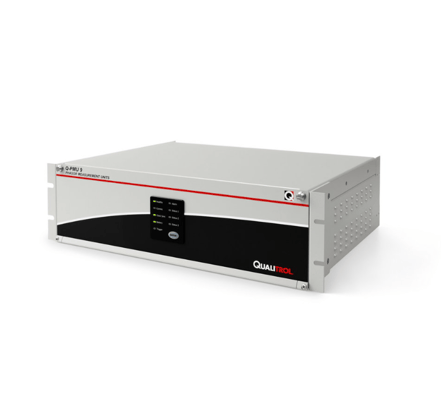
Insulect supplies Qualitrol PMU solutions for transmission utilities, renewable energy projects, power generators and large industrial facilities across Australia and New Zealand.
Contact us to learn how Qualitrol PMU technology can help your organisation strengthen grid stability analysis, support power-system model validation, improve frequency-performance assessment and enhance wide-area monitoring across your transmission network.