


When we talk about data centre uptime, the conversation usually revolves around redundant UPS systems, backup generators, liquid cooling loops, and state-of-the-art cybersecurity. However, one critical part of your power infrastructure often goes unnoticed, even though a failure can bring your entire facility to a standstill. Medium voltage (MV) and high voltage (HV) power cables are the silent backbone of reliable data centre operations.
As data centres scale to support high-density AI clusters and massive cloud workloads, the power coming into these facilities is stepping up. Managing these massive currents requires robust single-core cables. However, single-core cables introduce a unique physics problem, one that Sheath Voltage Limiters (SVLs) are specifically designed to solve.
Here is a look at what SVLs are, why they are critical for data centre reliability, and how they protect your facility from catastrophic power failures.
The Physics Problem
To understand why data centres need SVLs, we first have to look at how single-core MV and HV cables behave.
When high alternating current (AC) flows through the copper or aluminum conductor of a single-core cable, it acts like a transformer. This current creates an electromagnetic field that induces a voltage in the surrounding metallic sheath (the outer protective metal layer of the cable).
If you ground this metallic sheath at both ends of the cable run (solid bonding), you create a closed loop. The induced voltage drives a continuous current through the sheath. This circulating current generates significant heat, which:
- Reduces the overall current-carrying capacity (ampacity) of your cables.
- Forces you to run larger, more expensive cables.
- Accelerates insulation degradation over time.
To prevent this heating, engineers use cable sheath bonding techniques that break the electrical loop responsible for circulating currents. Eliminating these currents reduces heat losses, improves cable efficiency, and increases the power carrying capacity of the cable system.
However, this creates a new hazard because the induced voltage at the ungrounded end of the cable can rise to dangerous levels. During normal operations, this voltage is manageable. But during a system fault, lightning strike, or heavy switching transient (which are common when switching massive data centre transformers), this voltage can spike to tens of kilovolts.
Without protection, this transient voltage will puncture the cable’s outer plastic jacket, leading to a sheath-to-ground fault, water ingress, cable degradation, and ultimately, a catastrophic phase-to-ground short circuit.
How an SVL Protects Your Cable System
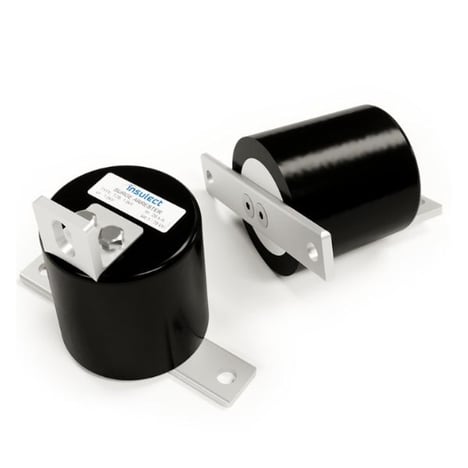
An SVL is a specialized surge arrester (typically containing non-linear zinc oxide, or ZnO, varistors) connected between the isolated metallic sheath and the ground.
Under normal, steady-state operating conditions, the SVL acts as an open circuit (high resistance). It prevents circulating currents, keeping your cables running cool and efficiently.
However, the moment a high-voltage transient occurs, such as a lightning strike on the utility line or a switching surge, the SVL instantly transitions to a low-resistance state. It safely clamps the overvoltage and diverts the energy to the ground, protecting the cable’s outer jacket from insulation breakdown. Once the surge passes, the SVL automatically resets back to its high-resistance state.
Why Data Centres Cannot Afford to Ignore SVLs
For data centre operators, even the smallest interruption to power can have significant consequences, making reliability a top priority. SVLs directly contribute to this metric in several critical ways:
1. Maximizing Power Capacity and Cable Efficiency
Data centres are power-hungry environments where space in cable trenches and duct banks is at a premium. By using cable sheath bonding techniques together with properly specified SVLs, engineers can eliminate circulating sheath currents and reduce heat losses. This allows power cables to operate more efficiently, increasing their current carrying capacity without the need for larger, more expensive conductors.
2. Safeguarding Against Switching Transients
Data centres routinely switch massive inductive loads, from large backup generators to multi-megawatt step-down transformers. These switching operations generate high-frequency voltage transients. SVLs are your primary defense against these localised surges, ensuring that transient energy doesn’t punch through your cable jackets.
3. Personnel and Equipment Safety
During a short circuit, the voltage on an ungrounded cable sheath can spike to levels that present a severe shock hazard to maintenance personnel working near the cable glands or link boxes. SVLs limit these “touch voltages” to safe levels, protecting your staff and third-party contractors.
4. Preventing Costly Unscheduled Downtime
A punctured cable jacket is a ticking time bomb. Once the outer sheath is compromised, moisture can seep into the cable and gradually weaken the insulation over time. As the insulation deteriorates, the risk of an electrical fault increases, potentially leading to a major phase to ground failure. These problems often develop unnoticed for months or even years, making the eventual failure sudden and highly disruptive. SVLs help prevent the initial cable jacket damage from occurring in the first place.
Best Practices for Data Centre Facilities
To ensure your cable infrastructure remains bulletproof, consider the following SVL best practices:
- Specify SVLs During Design: Ensure your engineering, procurement, and construction (EPC) partners have properly calculated induced sheath voltages and specified correctly rated SVLs for all MV utility feeds and internal MV distribution.
- Regular Maintenance and Testing: SVLs are sacrificial devices. Over time, heavy surges can degrade the varistors. Include SVL testing (such as insulation resistance and leakage current testing) in your routine electrical preventive maintenance (EPM) cycles.
- Enclose in Cable Link Boxes: SVLs should be installed in robust, waterproof link boxes to protect them from environmental degradation, flooding, and accidental contact.
Reliable Protection Starts with the Right SVL
As data centres continue to grow in scale and criticality across Australia and New Zealand, every component in the power network plays a role in ensuring uptime and asset protection, including the often-overlooked SVL. Choosing high-quality, application-specific SVLs can help improve cable system reliability, reduce maintenance risks, and protect valuable infrastructure from transient overvoltages.
Insulect proudly manufactures Sheath Voltage Limiters in Australia, supplying utilities, EPCs, consultants, and data centre operators across Australia and New Zealand. Backed by local engineering expertise, responsive technical support, and products designed for regional standards and operating conditions, we're here to help you build more reliable high-voltage cable systems. If you're planning a new data centre, upgrading existing infrastructure, or looking for expert advice on cable protection, contact the Insulect team to discuss the right SVL solution for your project.