


Spotting power faults early at large sites is difficult due to a combination of technical, operational, and data-related challenges:
- Distinguishing Faults from Normal Variability: Utilities and large sites struggle to differentiate between genuine fault precursors and harmless, routine fluctuations in electrical power. This ambiguity can lead to missed detections or false alarms.
- Lack of Real-Time Data and Actionability: Many sites collect large amounts of data but lack systems that process it into actionable insights. Without real-time edge analytics, operators cannot quickly identify the “who,” “what,” and “where” of emerging issues.
- Absence of Early Warning Systems: Faults often occur without outward signs (e.g., no visible sparks or alarms). Without advanced diagnostic tools, issues are only discovered after a failure has already caused a shutdown.
- Inadequate Monitoring of Critical Components: Key elements like UPS systems, batteries, inverters, and cooling fans often fail due to age, wear, or lack of close monitoring. Many failures happen because these components aren’t tracked closely enough by experienced technicians or automated systems.
- Complexity of Backup Power Systems: Emergency and backup power systems are highly complex. When components become obsolete, fail, or violate codes, site resilience drops. Without continuous self-diagnostics and event logging, sites may not know backup systems are compromised until they’re needed.
- Poor Situation Awareness: During high-stress events, lack of physical and cyber situation awareness prevents operators from taking timely corrective actions. Historical blackouts have shown that insufficient real-time diagnostic support contributes to the rapid propagation of faults.
- Challenges in Fault Location: In some cases, especially with distributed or remote infrastructure, maintenance crews must navigate difficult terrain to reach faults, delaying both detection and repair.
Early fault detection is hindered by data overload without insight, inadequate monitoring, lack of predictive tools, and operational complexity. Solutions like real-time edge monitoring and continuous system diagnostics are critical to overcoming these barriers.
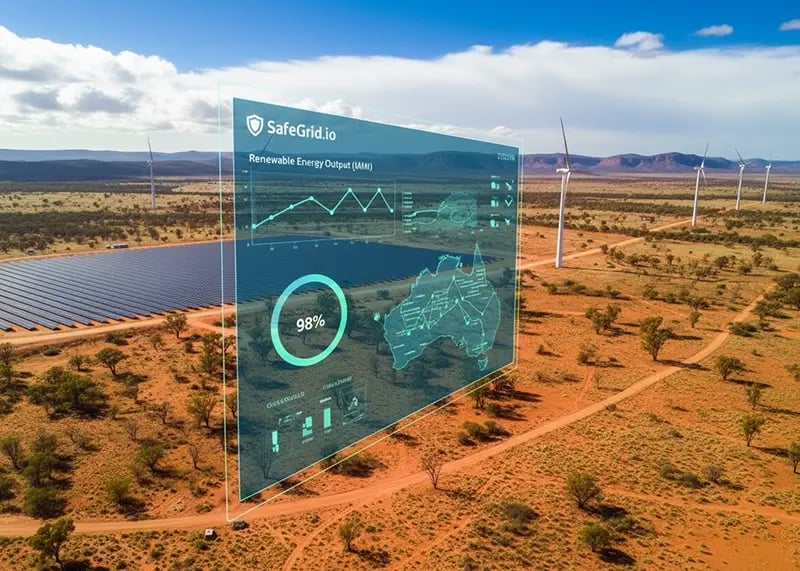
Improving Grid Reliability with Real-Time Fault Detection
As Australia’s energy networks continue to expand across vast and often remote regions, the ability to detect and respond to power faults quickly has never been more critical. The collaboration between Safegrid and Insulect brings together cutting-edge real-time monitoring, predictive analytics, and proven grid protection expertise to give utilities a clearer, faster view of what is happening on their networks.
If you’re looking to improve reliability, reduce outage durations, and strengthen resilience against bushfire risk and other network disruptions, now is the time to explore how advanced grid visibility can transform your operations. Get in touch to learn how this integrated approach can help your network move from reactive maintenance to proactive, intelligent grid management.