

Dissolved gases in transformer oil can provide valuable clues about the internal condition of a power transformer. By analysing the types, concentrations and trends of these gases, engineers can identify signs of potential overheating, electrical discharge, insulation deterioration and other developing faults. This process, known as Dissolved Gas Analysis (DGA), is widely used in transformer condition assessment to support maintenance planning and help reduce the risk of unexpected outages.
However, no single gas confirms a specific fault. Accurate interpretation requires consideration of multiple gases, their rates of change, the transformer's operating history and other diagnostic information.
What Is Dissolved Gas Analysis (DGA)?
Power transformers commonly use insulating oil to provide electrical insulation and help transfer heat away from internal components. Under normal operating conditions, the oil and solid insulation materials gradually age. When abnormal thermal or electrical stresses occur, they can decompose and generate additional gases.
Some of these gases dissolve in the insulating oil, where they can be detected through laboratory testing or online monitoring equipment.
DGA involves measuring the concentrations of selected gases and interpreting the results to assess the transformer's condition.
The findings can help engineers investigate potential problems such as:
- Localised overheating of oil or solid insulation
- Electrical discharges within the insulation system
- High-energy electrical faults, including arcing
- Deterioration of paper-based insulation
- Abnormal activity associated with internal components or connections
DGA is a diagnostic tool rather than a definitive fault detector. Its greatest value comes from combining gas analysis with engineering judgement, historical data and other available condition indicators.
What Do the Main Dissolved Gases Indicate?
Different gases can be associated with different types of thermal and electrical activity. Understanding these associations helps engineers identify possible fault conditions and determine whether further investigation is necessary.
1. Hydrogen (H₂) and Electrical Activity
Hydrogen is an important gas in transformer DGA because it can be generated by several types of electrical and thermal activity.
Elevated or increasing hydrogen concentrations may be associated with partial discharge, low-energy electrical activity or other developing faults. However, hydrogen is not specific to one fault type and should be interpreted alongside other gases.
Practical example: If a transformer shows a sustained increase in hydrogen while other gas concentrations remain relatively stable, engineers may investigate possible electrical discharge activity, verify the measurements and compare the results with previous DGA reports.
The trend can help determine whether additional testing or closer monitoring is warranted.
2. Methane (CH₄) and Ethane (C₂H₆) as Indicators of Thermal Activity
Methane and ethane can be produced when insulating oil undergoes thermal decomposition.
Their presence may be associated with lower-temperature thermal faults, but their significance depends on the concentrations, relationships with other gases and the transformer's operating conditions.
Practical example: A gradual increase in methane and ethane may prompt engineers to examine the complete gas profile and review loading and temperature records. The findings may help determine whether a thermal issue should be investigated further.
Neither gas, on its own, establishes the location or severity of a fault.
3. Ethylene (C₂H₄) and Higher-Temperature Thermal Faults
Ethylene is commonly associated with higher-temperature decomposition of mineral insulating oil.
An increasing ethylene concentration, particularly when accompanied by changes in other combustible gases, can indicate developing thermal activity that requires further assessment.
Practical example: If ethylene rises alongside abnormal oil-temperature readings, engineers may investigate potential overheating, cooling-system performance and operating conditions. Additional testing may be needed to establish the cause.
The relationship between gas trends and operating data can provide more useful diagnostic information than either measurement alone.
4. Acetylene (C₂H₂) and High-Energy Electrical Discharge
Acetylene is an important indicator because it can be generated by high-energy electrical discharge, including arcing, in oil-filled equipment.
Its presence or a significant increase may warrant prompt attention, depending on the concentration, trend, equipment history and other findings.
Practical example: If acetylene increases unexpectedly in a transformer that previously showed little or none, the asset owner may initiate an engineering review, confirm the result and assess the need for further diagnostics or operational action.
The response should follow the asset owner's procedures and the assessed level of risk. Acetylene should not be interpreted in isolation, and its presence does not automatically prove that a severe fault has occurred.
5. Carbon Monoxide (CO) and Carbon Dioxide (CO₂) as Indicators of Paper Insulation Deterioration
Transformers commonly use cellulose-based materials, including paper and pressboard, as part of their insulation systems.
Thermal degradation of these materials can produce carbon monoxide and carbon dioxide. These gases may therefore provide information about the condition of solid insulation.
However, they can also be influenced by other factors, including oil ageing and operating history. Their concentrations and trends need to be interpreted carefully.
Practical example: If carbon monoxide increases over time, engineers may review carbon dioxide levels, other dissolved gases, loading history and available insulation-condition information. The results can help determine whether further investigation into possible paper insulation deterioration is appropriate.
DGA alone cannot provide a complete assessment of remaining insulation life.
Summary of Common DGA Gases
| Gas | Potential diagnostic association |
|---|---|
| Hydrogen (H₂) | Partial discharge and various electrical or thermal processes |
| Methane (CH₄) | Thermal decomposition of oil and some electrical activity |
| Ethane (C₂H₆) | Thermal decomposition of oil, often associated with lower-temperature heating |
| Ethylene (C₂H₄) | Higher-temperature thermal decomposition of oil |
| Acetylene (C₂H₂) | High-energy electrical discharge, including arcing |
| Carbon monoxide (CO) | Possible cellulose insulation degradation and other thermal processes |
| Carbon dioxide (CO₂) | Possible cellulose degradation and other ageing processes |
These associations are general diagnostic guides, not one-to-one fault identifications. Gas patterns, concentrations, trends and equipment-specific context must all be considered.
Why Must DGA Results Be Interpreted in Context?
Finding a gas in transformer oil does not necessarily mean the transformer has a fault. Some gases may be present because of normal ageing, historical events, previous faults or other operating influences.
The key is to determine whether the results represent normal behaviour, a developing abnormal condition or a situation that requires urgent investigation.
Engineers typically consider several factors when interpreting DGA results.
Gas Concentrations and Trends
A single DGA report provides a snapshot of the transformer's condition. Comparing successive reports can reveal whether gas concentrations are stable, increasing or changing rapidly.
The rate of change can be particularly important. A rapid increase may warrant a different response from a stable concentration that has been observed over an extended period.
Relationships Between Different Gases
Engineers assess combinations of gases rather than relying on a single result. Established interpretation techniques, including gas ratios and graphical methods, can help distinguish between possible fault types.
These methods have limitations, and not every result fits a clear diagnostic category.
Transformer Design and Operating History
Interpretation should account for factors such as transformer age, design, loading, temperature, previous faults, maintenance activities and the insulating liquid used.
Results from mineral-oil-filled transformers should not automatically be interpreted using the same assumptions as those for equipment using other insulating liquids.
Sampling and Measurement Quality
Poor sampling practices, contamination, air ingress or measurement problems can affect DGA results.
When a result is unexpected or inconsistent with other information, engineers may need to verify the data or arrange confirmatory testing before making significant maintenance decisions.
Which Standards Guide DGA Interpretation?
Two important references for mineral-oil-filled transformers are IEEE C57.104-2019 and IEC 60599:2022.
IEEE C57.104-2019 — Guide for the Interpretation of Gases Generated in Mineral Oil-Immersed Transformers
This IEEE guide covers the purpose and application of DGA, data quality and limitations, interpretation methods, fault identification and case studies. It helps operators assess the serviceability of transformer assets using gas-analysis information.
IEC 60599:2022 — Mineral oil-filled electrical equipment in service — Guidance on the interpretation of dissolved and free gases analysis
This IEC standard provides guidance on interpreting dissolved and free gas concentrations to help diagnose the condition of in-service electrical equipment filled with mineral insulating oil and using cellulose-based solid insulation. It also discusses how the findings may inform subsequent action.
Both references emphasise the importance of interpretation and engineering judgement. Their diagnostic guidance should not be treated as an automatic fault verdict or a substitute for an appropriate assessment of the equipment.
Official references:
How Can Online DGA Monitoring Help Protect Transformer Assets?
Traditional DGA testing commonly involves collecting an oil sample and sending it to a laboratory for analysis. This provides valuable diagnostic information, but the result represents the condition of the oil at the time of sampling.
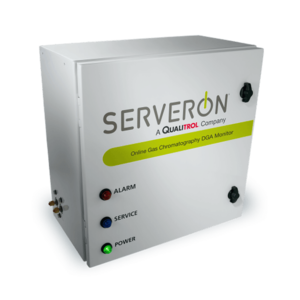
Online DGA monitoring provides more frequent measurements while the transformer remains in service. Depending on the system, it may measure hydrogen or several dissolved gases and provide trends and alerts when configured conditions are met.
This can help asset managers:
- Identify unusual changes between scheduled laboratory tests.
- Track the development of potential faults.
- Prioritise assets that may require further investigation.
- Support condition-based maintenance planning.
- Combine gas data with other transformer monitoring measurements.
Online monitoring does not remove the need for laboratory testing or expert interpretation. Instead, it can complement established diagnostic practices by providing additional information about how conditions evolve over time.
For example, an online monitor may identify a sustained rise in a selected gas. Engineers can review the trend, compare it with other available measurements and decide whether to collect a confirmatory sample, undertake further diagnostics or take another action consistent with the asset's risk profile.
Explore Insulect's Online DGA and Transformer Diagnostic Solutions
Want to improve visibility of your transformer assets? Insulect supports Australian utilities, generators, major energy users and service providers with transformer monitoring technologies and local engineering expertise.
Our transformer monitoring portfolio includes online dissolved gas analysis systems, single-gas and multi-gas monitoring options, and integrated monitoring platforms that can combine DGA with other condition indicators.
Depending on the application, these technologies can help asset owners improve visibility of transformer condition, identify abnormal trends and support informed maintenance decisions.
Explore Insulect's online DGA and transformer monitoring solutions or contact the Insulect team to discuss the monitoring approach that best suits your equipment and operational requirements.
FAQ
1. Does the presence of dissolved gases always mean a transformer has a fault?
No. Gases may be present because of normal ageing, previous events or other operating influences. Engineers need to assess gas concentrations, trends, relationships between gases and the transformer's history before drawing conclusions.
2. Which gas is the most important in transformer DGA?
There is no single gas that is always the most important. Hydrogen, acetylene, ethylene, methane, ethane, carbon monoxide and carbon dioxide can all provide useful information, depending on the circumstances. The complete gas profile and its development over time are more informative than one measurement alone.
3. What is the difference between laboratory DGA and online DGA monitoring?
Laboratory DGA analyses a collected oil sample and can provide a useful diagnostic snapshot, often as part of a broader oil-testing programme. Online DGA measures selected gases more frequently while the transformer remains in service, helping engineers observe trends and identify changes between scheduled tests. The methods can complement each other.
4. How often should transformer oil be tested for DGA?
The appropriate interval depends on the transformer's criticality, age, condition, operating environment, previous results and applicable maintenance requirements. Asset owners should establish testing intervals using relevant standards, manufacturer recommendations and their own risk-based maintenance practices.
5. Can DGA determine exactly where a transformer fault is located?
Not usually by itself. DGA can help identify possible fault types, but it does not necessarily pinpoint the physical location. Other diagnostic tests, monitoring data, inspections and engineering assessments may be required.