

Surge arrestors (often integrated into Surge Protective Devices, or SPDs) protect industrial electrical equipment by acting like electrical pressure relief valves. They detect dangerously high voltage spikes and instantly divert the excess energy safely to the ground before it can reach and damage sensitive machinery.
Here is a detailed breakdown of how they work, the components they use, and why they are vital in industrial environments.
1. The Step-by-Step Protection Mechanism
Under normal conditions, electricity flows from the power source directly to your industrial equipment. A surge arrestor is installed in parallel with the equipment (connected between the power lines and the ground).
Step A: Normal Operation (High Impedance State)
Under normal operating voltages, the surge arrestor has extremely high resistance (impedance).
- To the electrical circuit, the arrestor looks like an open switch or a dead end.
- No current flows through the arrestor to the ground, allowing 100% of the power to safely reach the industrial equipment.
Step B: Detection & Triggering (The Clamping Voltage)
When a voltage spike occurs—whether from a lightning strike, utility grid switching, or a heavy industrial motor turning on—the voltage rapidly rises.
- Every surge arrestor has a specific threshold called the Maximum Continuous Operating Voltage (MCOV) and a voltage protection level (clamping voltage).
- Once the incoming voltage exceeds this threshold, the arrestor’s internal components instantly react (often in nanoseconds).
Step C: Shunting the Surge (Low Impedance State)
Upon exceeding the threshold, the arrestor’s resistance drops to near zero.
- Because electricity always takes the path of least resistance, the massive surge of current bypasses the industrial equipment and flows directly through the arrestor to the grounding system (earth).
- This process is called “shunting” or “clamping.” By diverting the current, the arrestor limits (clamps) the voltage reaching the equipment to a safe, manageable level.
Step D: Instant Recovery (Resetting)
As soon as the surge passes and the voltage drops back to normal operating levels, the arrestor instantly transitions back to its high-impedance state.
- This prevents “follow current” (normal grid power trying to follow the surge path to the ground), ensuring the industrial process continues running without interruption or tripping circuit breakers.
2. Key Components Used in Surge Arrestors
Industrial surge arrestors rely on heavy-duty, fast-acting materials to handle massive currents:
- Metal Oxide Varistors (MOVs): The most common component in industrial SPDs. An MOV consists of a matrix of zinc oxide grains. At normal voltages, the boundaries between grains block current. At high voltages, these boundaries become highly conductive, instantly routing the surge to the ground.
- Gas Discharge Tubes (GDTs): These contain a specific gas mixture between two electrodes. When a high-voltage spike occurs, the gas ionizes, becoming an extremely low-resistance conductor that dumps massive amounts of current to the ground. They are highly durable but react slightly slower than MOVs.
- Silicon Avalanche Diodes (SADs): These offer incredibly fast response times and precise clamping voltages. They are typically used to protect highly sensitive industrial electronics (like PLCs and communication lines) rather than heavy power mains.
3. Why Industrial Settings Require Surge Arrestors
Industrial environments are uniquely prone to voltage surges, which generally fall into two categories:
- External Surges (approx. 20%): Lightning strikes hitting power lines or nearby ground, and utility grid switching. These are rare but carry catastrophic levels of energy that can instantly vaporize control boards and melt motor windings.
- Internal Surges (approx. 80%): Created inside the facility itself. When heavy inductive loads—such as large motors, arc welders, compressors, or transformers—cycle on and off, they generate transient “kickback” voltages. While smaller than lightning, these thousands of daily micro-surges degrade insulation over time, leading to premature equipment failure.
By installing surge arrestors at the service entrance (main panel) and at individual critical machines, industrial facilities:
- Prevent immediate destruction of expensive electronics.
- Stop gradual degradation of motor winding insulation.
- Eliminate costly downtime and lost production hours caused by mysterious control-system lockups or fried circuit boards.
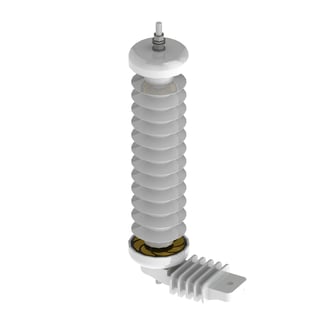
Need help selecting the right surge arrestor for your application?
Insulect supplies high-quality surge arrestors for utilities, industrial facilities, renewable energy projects, and infrastructure across Australia and New Zealand. Our experienced team can help you choose the right solution based on your system voltage, environmental conditions, and protection requirements. Contact Insulect today to discuss your project or learn more about our range of surge protection solutions.