

Reliable electricity is about more than simply keeping the lights on. Today's power systems must also deliver electricity that meets strict quality standards to ensure the safe and efficient operation of transmission networks, renewable energy projects and industrial facilities.
Voltage fluctuations, harmonics, frequency variations and other power-quality disturbances can reduce equipment performance, disrupt industrial processes and complicate compliance with network connection requirements.
Power Quality Monitoring (PQM) provides engineers with accurate, objective measurement data to identify these issues, investigate network disturbances and support ongoing improvements in grid reliability.
What Is Power Quality Monitoring?
Power Quality Monitoring (PQM) continuously measures key electrical parameters that indicate the health and stability of a power system.
These measurements typically include:
- Voltage
- Current
- Frequency
- Harmonics
- Flicker
- Voltage sags and swells
- Interruptions
- Other power-quality events
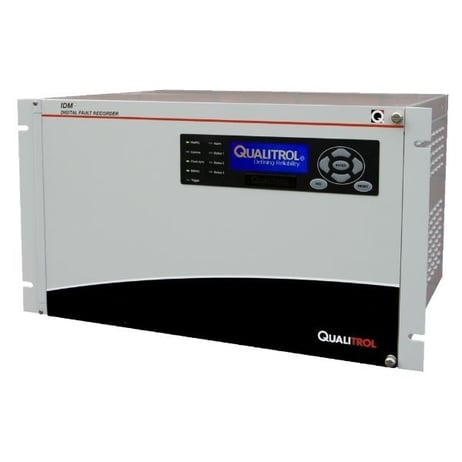
Where applicable, Qualitrol monitoring equipment provides IEC 61000-4-30 Class A measurement capability, delivering high-accuracy data suitable for power-quality investigations and compliance monitoring.
For Australian transmission networks, renewable energy connection points, mining operations and large industrial facilities, PQM provides the objective evidence needed to understand power-system performance and support informed engineering decisions.
Identifying Power-Quality Issues Before They Become Major Problems
Many power-quality issues develop gradually and may not immediately result in equipment failure.
Continuous monitoring enables engineers to identify trends and investigate events before they have a significant impact on network performance.
Power Quality Monitoring helps identify:
- Voltage sags and swells
- Interruptions
- Harmonic distortion
- Voltage flicker
- Frequency-related events
By understanding how these disturbances affect transformers, capacitor banks, inverter-based resources, power-electronic equipment and critical industrial loads, asset owners can take proactive steps to improve system performance and reduce operational risk.
Supporting More Effective Disturbance Analysis
When a power-system disturbance occurs, engineers need reliable measurement data to understand what happened.
Power Quality Monitoring provides traceable electrical measurements that help reconstruct the event and investigate its likely cause.
Rather than identifying the physical cause of a fault on its own, PQM provides objective evidence that can be correlated with information from:
- Digital Fault Recorders (DFR)
- Dynamic Disturbance Recording (DDR)
- Sequence of Events (SOE)
- Protection systems
- Field inspections
Combining these complementary data sources gives engineers a much clearer understanding of network disturbances.
Managing Power Quality in Renewable Energy Projects
As renewable generation continues to grow across Australia and New Zealand, maintaining power quality has become increasingly important.
Wind farms, solar farms and Battery Energy Storage Systems (BESS) can introduce additional considerations at the network connection point, including:
- Harmonic distortion
- Voltage fluctuations
- Flicker
- Resonance effects
Power Quality Monitoring helps renewable energy developers, generators, Network Service Providers (NSPs) and Transmission Network Service Providers (TNSPs) evaluate system performance and investigate interactions between:
- Power converters
- Harmonic filters
- Underground cables
- Power transformers
- The wider transmission network
These insights support stable network operation and assist with meeting connection performance requirements.
Supporting High-Voltage Connection-Point Compliance
Power Quality Monitoring also plays an important role in demonstrating compliance at high-voltage connection points.
Accurate measurement data supports harmonic assessment and planning in accordance with relevant Australian and IEC-aligned standards, including AS/NZS 61000.3.6, where applicable for harmonic emission planning in medium-, high- and extra-high-voltage systems.
Depending on the project, compliance requirements may also involve:
- Australian Energy Market Operator (AEMO)
- National Electricity Rules (NER)
- Network Service Provider (NSP/TNSP) connection requirements
- Generator Performance Standards (GPS)
Objective monitoring data provides valuable evidence during commissioning, ongoing compliance assessments and disturbance investigations.
Improving Reliability for Industrial Operations
Power-quality disturbances can have a significant impact on energy-intensive industrial facilities.
Operations such as:
- Aluminium smelters
- Mining sites
- Process plants
- Large motor installations
- Arc furnaces
- Rectifier systems
often rely on stable electrical supply to maintain production efficiency.
Power Quality Monitoring provides objective measurement evidence that supports site investigations and facilitates technical discussions between industrial customers and their network service providers when power-quality issues arise.
Building a More Reliable Power Network
As electricity networks become more dynamic, understanding power quality is essential for maintaining reliable system performance.
Power Quality Monitoring provides the accurate measurement data needed to identify emerging issues, investigate disturbances and support compliance with network performance requirements.
When integrated with complementary monitoring technologies such as DFR, DDR, SOE and PMUs, PQM provides a more complete picture of power-system behaviour and helps engineers make better-informed operational decisions.
Contact Us to Improve Power-Quality Visibility
Insulect supplies Qualitrol Power Quality Monitoring solutions for transmission utilities, renewable energy projects, mining operations and large industrial facilities across Australia and New Zealand.
Contact us to discuss how our power-quality monitoring solutions can help your organisation obtain accurate compliance data, investigate disturbances, and improve power-quality performance at high-voltage connection points.