


When a major disturbance occurs on a transmission network or industrial power system, engineers often need to collect information from multiple monitoring devices across several substations before they can begin their investigation.
Retrieving Digital Fault Recorder (DFR) files, Dynamic Disturbance Recording (DDR) data, Phasor Measurement Unit (PMU) measurements and Power Quality (PQ) records from individual devices can be a time-consuming process, especially when rapid analysis is required.
Qualitrol iQ+ simplifies this workflow by providing a centralised software platform that collects, manages and organises monitoring data from supported Qualitrol devices. The result is faster access to critical information, improved event visibility and a more efficient disturbance investigation process.
What Is Qualitrol iQ+?
Qualitrol iQ+ is a centralised master-station software platform designed to manage and analyse records from Qualitrol grid-monitoring devices across multiple substations and industrial sites.
Rather than functioning as an Advanced Distribution Management System (ADMS), feeder automation platform or outage management system, iQ+ is purpose-built for transmission, power generation, renewable energy, mining and large industrial applications.
It provides engineering teams with a single platform for retrieving and reviewing monitoring records from multiple locations, reducing the effort required to access data after a network event.

Centralising Event Data Across Multiple Devices
Large disturbances often generate records from several monitoring devices operating simultaneously.
Qualitrol iQ+ can be deployed using a client-server architecture to collect, store and manage event data from supported Qualitrol equipment, including:
- Qualitrol IDM+
- Digital Fault Recorders (DFRs)
- Dynamic Disturbance Recording (DDR) functions
- Power Quality (PQ) monitors
- Phasor Measurement Units (PMUs)
- Travelling Wave fault-location devices
Instead of manually connecting to individual devices after each event, engineers can retrieve the required information through a single, centralised platform.
Comparing Events Across Multiple Substations
Many transmission disturbances extend beyond a single substation.
Generator trips, transmission-line faults and frequency events often require engineers to compare measurements from several substations, renewable energy connection points or industrial facilities before determining how the disturbance developed.
Qualitrol iQ+ brings these records into a common environment, allowing engineers to review:
- DFR records
- DDR records
- PMU measurements
- Power Quality data
By analysing multiple data sources together, engineers can build a more complete understanding of network behaviour during major events.
Reviewing Waveforms, Trends and Power Quality
Effective disturbance investigations require more than simply collecting event files.
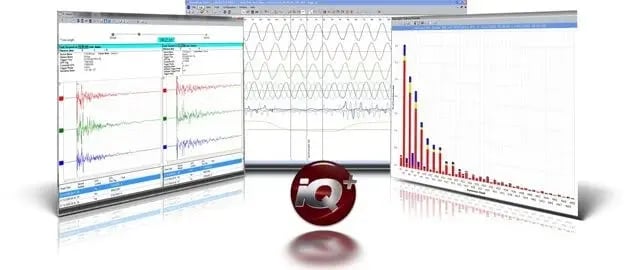
Qualitrol iQ+ provides tools for reviewing information captured by supported monitoring devices, including:
- High-speed waveform records
- Disturbance trends
- Power-quality events
- Harmonic information
- Event summaries
The software presents the recorded evidence in a consistent format, helping engineers analyse system behaviour more efficiently. Engineering judgement remains essential, as iQ+ supports the investigation process rather than automatically determining the physical cause of every event.
Supporting Transmission-Line Fault Investigations
Where Qualitrol Travelling Wave fault-location devices are installed, iQ+ also supports the retrieval, display and review of transmission-line fault-location information.
This enables protection and maintenance teams to quickly identify the section of line requiring inspection following a transmission-line trip.
By narrowing the search area, engineers can prioritise field inspections, reduce unnecessary line patrols and improve restoration planning.
Supporting Frequency and System Performance Analysis
Australia's evolving electricity network requires engineers to understand not only faults but also dynamic system performance.
When integrated with supported monitoring devices, Qualitrol iQ+ provides a convenient platform for retrieving and comparing records used for:
- Frequency Control Ancillary Services (FCAS) monitoring
- Frequency-performance review
- Rate of Change of Frequency (RoCoF) assessment
- Generator response analysis
- Battery Energy Storage System (BESS) performance review
- Power-system event reporting
The specific analysis available depends on the installed monitoring devices and their configured functions, with iQ+ serving as the central platform for accessing and comparing these records.
A Common Platform for Engineering Teams
One of the greatest benefits of Qualitrol iQ+ is its ability to bring together information that would otherwise be spread across multiple monitoring devices and substations.
For Transmission Network Service Providers (TNSPs), power generators, renewable energy operators, mining operations and large industrial facilities, this reduces fragmented data handling and creates a more consistent disturbance investigation workflow.
Engineering teams can:
- Retrieve event records more efficiently
- Compare data from multiple monitoring devices
- Export information for reporting
- Maintain a consistent approach to event analysis
The result is improved collaboration and faster access to the information needed to investigate complex power-system events.
Improving Visibility Across Modern Power Networks
As transmission networks continue to grow in complexity, rapid access to accurate monitoring data is becoming increasingly important.
Qualitrol iQ+ helps engineering teams streamline disturbance investigations by centralising records from multiple monitoring technologies into a single platform.
When used alongside Qualitrol's DFR, DDR, PMUs, PQ monitors and Travelling Wave fault-location systems, iQ+ provides a comprehensive environment for reviewing and managing power-system events.
Contact Insulect to Streamline Disturbance Analysis
As the authorised supplier of Qualitrol iQ+ in Australia and New Zealand, Insulect supports transmission utilities, power generators, renewable energy projects, mining operations and large industrial facilities with software implementation, monitoring-device integration and local engineering expertise.
Contact us to learn how Qualitrol iQ+ can help your organisation reduce manual record gathering, improve event visibility and streamline disturbance analysis across your transmission network or industrial power system.