

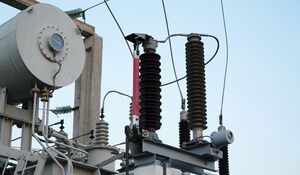
Power transformers are critical assets in electricity networks, and monitoring their condition is essential for maintaining reliability, managing maintenance costs and reducing the risk of unexpected outages. The most effective approach combines several monitoring methods, including online dissolved gas analysis (DGA), bushing monitoring, partial discharge detection and temperature monitoring. Together, these technologies provide a more comprehensive picture of transformer health, helping asset managers identify developing problems and make informed maintenance decisions.
Rather than relying on a single measurement, a well-designed transformer condition monitoring strategy considers multiple indicators, operating conditions and historical trends to help determine when further investigation or maintenance may be required.
Why Is Power Transformer Condition Monitoring Important?
Transformers operate under varying electrical loads, ambient temperatures and environmental conditions. Over time, these stresses can contribute to insulation deterioration, overheating, electrical discharge and mechanical wear.
Some developing faults produce measurable warning signs before they become serious. However, these signs may not be visible during routine inspections or captured by conventional protection systems alone.
Condition monitoring helps utilities and industrial operators:
- Identify developing faults earlier by detecting changes in gases, temperature, insulation condition and electrical activity.
- Support condition-based maintenance by using equipment data to inform maintenance planning rather than relying exclusively on fixed schedules.
- Reduce the risk of unplanned outages by helping maintenance teams investigate abnormal trends before they escalate.
- Improve asset management decisions by providing information to assess equipment condition, operational risk and remaining service life.
- Prioritise maintenance resources by identifying assets that may require closer inspection or further diagnostic testing.
Monitoring does not eliminate transformer failures, and not every fault produces a clear early warning. Its value lies in combining reliable measurements with sound engineering judgement and an appropriate response plan.
1. Online Dissolved Gas Analysis (DGA) and What Transformer Oil Can Reveal
Dissolved gas analysis is one of the most established methods for assessing the internal condition of mineral-oil-filled power transformers.
When faults develop inside a transformer, the resulting thermal or electrical stresses can decompose insulating oil and solid insulation materials, producing gases that dissolve in the oil. Analysing these gases can help identify potential problems that may otherwise remain undetected.
How does online DGA work?
An online DGA monitor samples transformer oil and measures selected dissolved gases while the transformer remains in service. Depending on the analyser, it may measure individual gases or provide multi-gas analysis.
Common gases of interest include:
- Hydrogen (H₂): Can be associated with several types of electrical or thermal activity.
- Methane (CH₄) and ethane (C₂H₆): May indicate thermal decomposition of oil under particular conditions.
- Ethylene (C₂H₄): Can be associated with higher-temperature oil decomposition.
- Acetylene (C₂H₂): Can be associated with high-energy electrical discharge, including arcing.
- Carbon monoxide (CO) and carbon dioxide (CO₂): Can provide information about the ageing or degradation of cellulose-based insulation, although interpretation requires care.
These associations are indicative rather than definitive. A gas concentration alone does not establish a fault, and interpretation depends on the overall gas pattern, concentration, rate of change, transformer design and operating history.
Online monitoring makes it possible to observe gas trends more frequently than periodic laboratory sampling, potentially providing earlier notification of a developing issue.
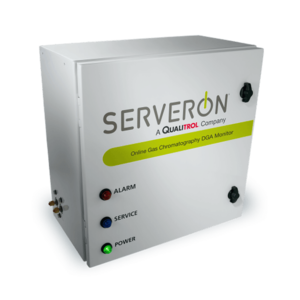
Practical example: Detecting a developing internal fault
Imagine a transformer whose hydrogen concentration begins rising consistently over several monitoring intervals.
Rather than treating one measurement as conclusive evidence of a fault, the maintenance team reviews the trend alongside other gases, loading conditions, recent maintenance activities and previous laboratory results.
If the pattern warrants further investigation, the team can arrange confirmatory oil sampling, diagnostic assessment and an appropriate operational response.
This approach helps turn monitoring data into actionable information.
Relevant standards: IEEE C57.104-2019, IEEE Guide for the Interpretation of Gases Generated in Mineral Oil-Immersed Transformers, provides guidance on DGA interpretation, data quality, limitations and fault assessment. IEC 60599:2022 provides guidance on interpreting dissolved and free gases in mineral-oil-filled electrical equipment. Both emphasise that results must be interpreted in context rather than treated as standalone proof of a fault.
References: IEEE C57.104-2019 | IEC 60599:2022
2. Transformer Bushing Monitoring and How to Detect Insulation Deterioration
Transformer bushings allow electrical conductors to pass safely through an earthed barrier, such as the transformer tank. They are critical insulation components, and deterioration can create a significant reliability risk.
Bushing insulation may deteriorate due to ageing, moisture ingress, electrical stress or other operating conditions. Some changes can develop gradually, making condition monitoring valuable for identifying abnormalities before they become more serious.
What does online bushing monitoring measure?
Depending on the bushing design and monitoring system, measurements may include:
- Capacitance: Changes can indicate changes in the condition of the bushing's capacitive insulation structure.
- Dissipation factor (tan delta) or power factor: Changes can provide an indication of variations in insulation losses.
- Leakage current and related electrical measurements: These may help identify abnormal behaviour when assessed using an appropriate monitoring method.
Online systems trend these measurements over time and can generate alerts when configured thresholds or abnormal changes are detected.
A trend is often more informative than a single reading. Temperature, voltage variation, interference and measurement conditions should also be considered when interpreting the results.
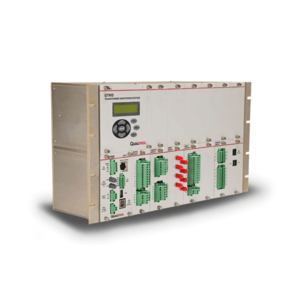
Practical example: Monitoring a critical substation transformer
Consider a transformer at a substation supplying a large industrial facility. Its bushing measurements begin to change compared with the established baseline.
The monitoring system alerts the maintenance team, which reviews the data and arranges further assessment. Depending on the findings, the team may decide to increase monitoring, undertake additional testing or plan an intervention during a suitable maintenance window.
Without this information, the change might remain unnoticed until a scheduled inspection or another event draws attention to the bushing.
Relevant standard: IEC 60137:2017, Insulated bushings for alternating voltages above 1 000 V, specifies characteristics and tests for insulated bushings. It provides an important technical reference for bushing design and testing, but it should not be interpreted as prescribing one universal online monitoring method for every installation.
Reference: IEC 60137
3. Partial Discharge Monitoring and How Electrical Activity Can Reveal Insulation Problems
Partial discharge (PD) is a localised electrical discharge that only partially bridges the insulation between conductors. It can occur in insulation systems where local electrical stress exceeds the withstand capability of a small region.
Depending on its location, cause and severity, persistent PD activity may contribute to insulation deterioration. Detecting and interpreting this activity can help engineers investigate potential problems in transformers and associated insulation systems.
How is partial discharge monitored?
PD monitoring systems detect signals associated with discharge activity using suitable sensors and measurement techniques.
Depending on the equipment and application, these may include:
- Ultra-high-frequency (UHF) sensors: Detect electromagnetic signals associated with PD activity.
- Electrical measurement methods: Measure discharge-related electrical quantities using suitable measurement arrangements.
- Acoustic methods: Detect sound or pressure waves generated by discharge activity and, in suitable applications, help investigate its location.
The appropriate technique depends on the transformer design, sensor arrangement, noise environment and monitoring objective.
Continuous or periodic PD monitoring can help establish a baseline and identify changes in activity. However, external interference can produce misleading signals, and not every detected event indicates a damaging internal fault. Signal validation and expert interpretation remain important.
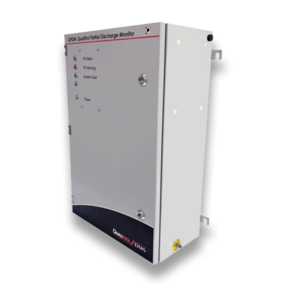
Practical example: Investigating unusual discharge activity
Suppose a transformer begins showing an increase in PD-related signals compared with its normal operating pattern.
Engineers can examine the timing, signal characteristics and trend, compare the findings with other monitoring parameters, and determine whether additional diagnostic testing is needed.
If the evidence suggests a credible insulation concern, the asset owner can plan an appropriate investigation and decide whether operational restrictions or maintenance are necessary.
Relevant standard: IEC 60270:2025, High-voltage test techniques – Charge-based measurement of partial discharges, covers charge-based PD measurements, measurement quantities, test arrangements, calibration and interference discrimination. Its scope should be distinguished from that of every online UHF or acoustic monitoring system, which may require additional application-specific guidance.
Reference: IEC 60270:2025
4. Transformer Temperature Monitoring and How to Detect Overheating
Temperature is another important indicator of transformer condition. Excessive operating temperatures can accelerate the ageing of insulation and reduce the margin available for safe operation under demanding load conditions.
Transformer temperature depends on factors such as electrical loading, ambient temperature, cooling-system performance, oil circulation and the design of the transformer.
What temperatures should be monitored?
Depending on the monitoring arrangement, measurements may include:
- Top-oil temperature: Indicates the temperature of the oil in the upper region of the transformer.
- Winding hot-spot temperature: Represents the temperature of the hottest part of the winding insulation and is particularly relevant to thermal ageing.
- Ambient temperature: Provides context for interpreting transformer temperature under changing environmental conditions.
- Cooling-system performance: Fan, pump and related operating information can help identify cooling problems that contribute to elevated temperatures.
Conventional temperature indicators provide useful operating information. More advanced systems can integrate multiple temperature measurements, calculate estimated hot-spot temperatures or use fibre-optic probes installed within the windings to obtain more direct measurements at selected locations.

Practical example: Identifying a cooling problem
A transformer operating during a period of high demand shows an unusual increase in top-oil temperature.
The maintenance team checks the transformer load, ambient conditions, temperature trends and cooling-system status. If a fan or pump is not operating as expected, the combined information can help identify a possible cooling issue.
Addressing the problem promptly may help prevent prolonged operation at elevated temperatures. Any decision to reduce loading or take equipment out of service should follow the asset owner's operating procedures and engineering assessment.
Relevant standard: IEC 60076-7:2018, Power transformers – Part 7: Loading guide for mineral-oil-immersed power transformers, provides guidance on the effects of loading and ambient temperature on transformer operating temperatures and thermal ageing. It is a useful reference for understanding the relationship between thermal conditions and transformer life.
Reference: IEC 60076-7:2018
5. Why Combine Multiple Transformer Monitoring Methods?
Each monitoring method provides information about a different aspect of transformer condition. No single measurement can reveal every developing fault.
For example, DGA may identify gas patterns associated with internal thermal or electrical activity, while bushing monitoring focuses on the condition of critical insulation components. PD monitoring can help identify localised discharge activity, and temperature monitoring provides information about thermal stress and cooling performance.
Combining these methods can give maintenance teams a more complete understanding of what is happening inside and around a transformer.
| Monitoring method | Primary focus | Example of a potential warning sign |
|---|---|---|
| Online DGA | Gases produced by internal thermal or electrical activity | An unusual rise in one or more dissolved gases |
| Bushing monitoring | Bushing insulation condition | A sustained change in capacitance or dissipation factor |
| Partial discharge monitoring | Localised electrical discharge activity | A change in validated PD signal patterns |
| Temperature monitoring | Thermal condition and cooling performance | Unexplained temperature increases under comparable operating conditions |
An integrated monitoring system can bring measurements together, present historical trends and generate alerts to support further investigation.
However, combining measurements does not automatically establish the cause of a fault. Diagnostic confidence depends on sensor quality, data validation, suitable thresholds and engineering interpretation.
6. How Should You Choose a Transformer Condition Monitoring System?
The most suitable monitoring arrangement depends on the transformer, its importance to the network and the consequences of an unexpected outage.
Before selecting a system, asset owners should consider:
1. Transformer criticality
A transformer supplying a major industrial operation or a critical network connection may justify a broader monitoring scope than a lower-consequence asset.
2. Known risks and failure history
Previous faults, recurring maintenance issues and known vulnerabilities can help determine which parameters deserve closer attention.
3. Existing instrumentation
Review the available temperature indicators, protection devices, DGA equipment and other sensors. An upgrade may be able to integrate existing measurements rather than replace every device.
4. Data integration and alarms
Consider whether the system can integrate relevant measurements, record trends, provide useful alerts and communicate with existing supervisory or asset management platforms.
5. Installation and maintenance requirements
Sensor compatibility, installation constraints, commissioning, calibration, communications and ongoing technical support should all form part of the assessment.
6. Standards and engineering requirements
The monitoring specification should reflect the relevant equipment standards, site requirements, operating procedures and asset management practices.
A staged approach can be practical: begin with the parameters most relevant to the asset's risks, then expand the system as monitoring needs and available data evolve.
How Insulect Can Help With Transformer Condition Monitoring
Looking to improve transformer condition monitoring at your site? Insulect supplies transformer monitoring technologies and supports utilities, generators, major energy users and service providers with equipment selection, system specification, commissioning and technical support.
Our transformer monitoring portfolio includes solutions for:
- Online dissolved gas analysis and gas monitoring.
- Transformer bushing condition monitoring.
- Partial discharge monitoring.
- Fibre-optic temperature monitoring.
- Integrated transformer monitoring through the Qualitrol Transformer Monitoring System (QTMS) and associated monitoring software.
Depending on the application, these technologies can be configured to monitor selected parameters or integrated into a broader transformer monitoring system.
The objective is to help asset owners obtain relevant condition information, identify abnormal trends and make better-informed maintenance decisions.
Explore Insulect's transformer monitoring solutions or contact the team to discuss the right approach for your assets.
FAQ
How often should a power transformer be monitored?
The appropriate monitoring frequency depends on transformer criticality, age, condition, operating environment, manufacturer recommendations and asset management requirements. Some parameters are measured continuously, while others are checked periodically during inspections or oil testing. Monitoring intervals should be determined by the asset owner based on risk and applicable requirements.
Can online transformer monitoring prevent transformer failure?
Online monitoring cannot guarantee the prevention of failure. It can help identify abnormal conditions and developing faults, giving maintenance teams an opportunity to investigate and respond. Its effectiveness depends on suitable monitoring coverage, reliable measurements, correct interpretation and timely action.
Is online DGA better than laboratory oil testing?
The two methods serve complementary purposes. Online DGA provides more frequent measurements and helps reveal trends, while laboratory testing can provide broader oil analysis and independent confirmation. The appropriate combination depends on the asset's needs, risk and monitoring strategy.
Does every power transformer need partial discharge monitoring?
Not necessarily. The decision should reflect the transformer's design, condition, criticality, known risks and the feasibility of obtaining meaningful measurements. PD monitoring may be particularly valuable where insulation condition is a significant concern or early detection could influence maintenance decisions.
What is the difference between temperature monitoring and DGA?
Temperature monitoring assesses thermal conditions and can help identify overheating or cooling problems. DGA analyses gases produced by internal thermal or electrical activity. Because they detect different indicators, the two methods can complement each other.
What should you do when a monitoring system raises an alarm?
An alarm should trigger a response defined by the asset owner's procedures. The team should validate the measurement, review historical trends and operating conditions, compare relevant monitoring parameters, and determine whether additional testing or inspection is needed. Operational decisions should be made by appropriately qualified personnel using the available evidence.